
Your cat stares out the window every single day. You know they want outside, but the risks — traffic, predators, disease — keep you saying no. That’s the guilt trip no cat owner wants to live with. A catio design fixes this problem completely.
It gives your cat fresh air, sunshine, and the thrill of the outdoors, all within a safe, enclosed space. Whether you have a tiny apartment balcony or a sprawling backyard, there’s a catio idea that fits your home.
This article walks you through 27 creative options, from simple DIY builds to full-on cat paradises.
What Is a Catio (And Why Your Cat Needs One)?
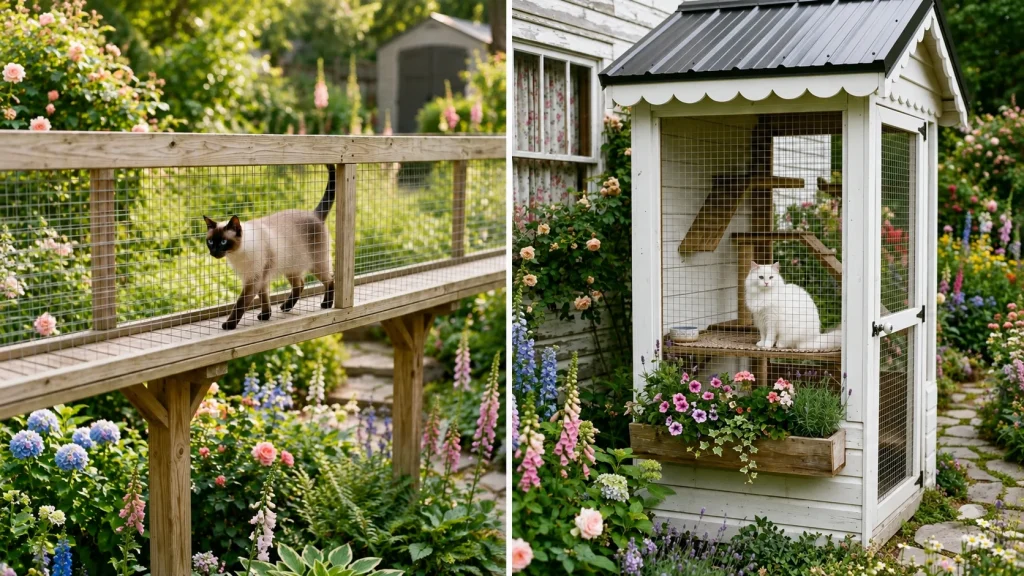
A catio is an outdoor cat enclosure that keeps your cat safe while giving them real outdoor access. Think of it as a screened porch, but built specifically for your feline. It connects to your home through a window, door, or cat flap.
Cats kept indoors live longer, healthier lives. But they still crave stimulation, fresh air, and something to watch. A catio hits that sweet spot between safety and freedom.
You don’t need a huge budget or a construction degree to build one. Many of the designs below are weekend DIY projects that cost under $200.
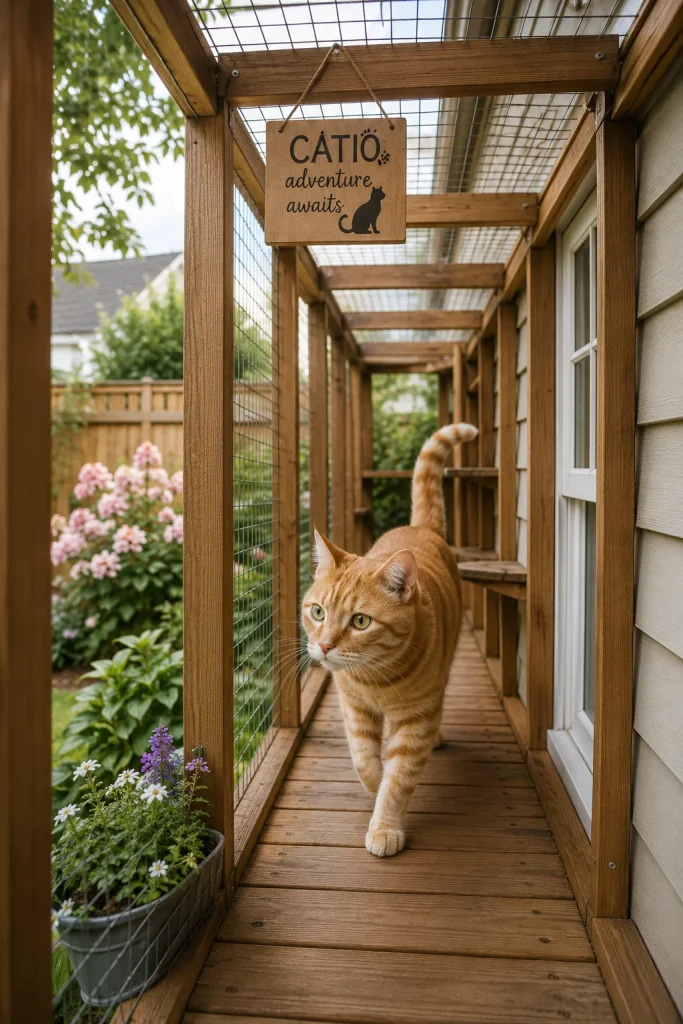
1. Window Box Catio
This is the most beginner-friendly option on this list. A window box catio attaches directly to your window frame, like a flower box but bigger. Your cat climbs through the window and sits in their own little outdoor pod.
It’s perfect for apartment dwellers with no yard space. Build it with basic lumber, mesh wire, and a few screws. The whole thing can sit on a window ledge without any ground support.
Most window box catios measure around 3 feet wide and 2 feet deep. That’s enough room for a cat to stretch, sniff the air, and watch the birds.
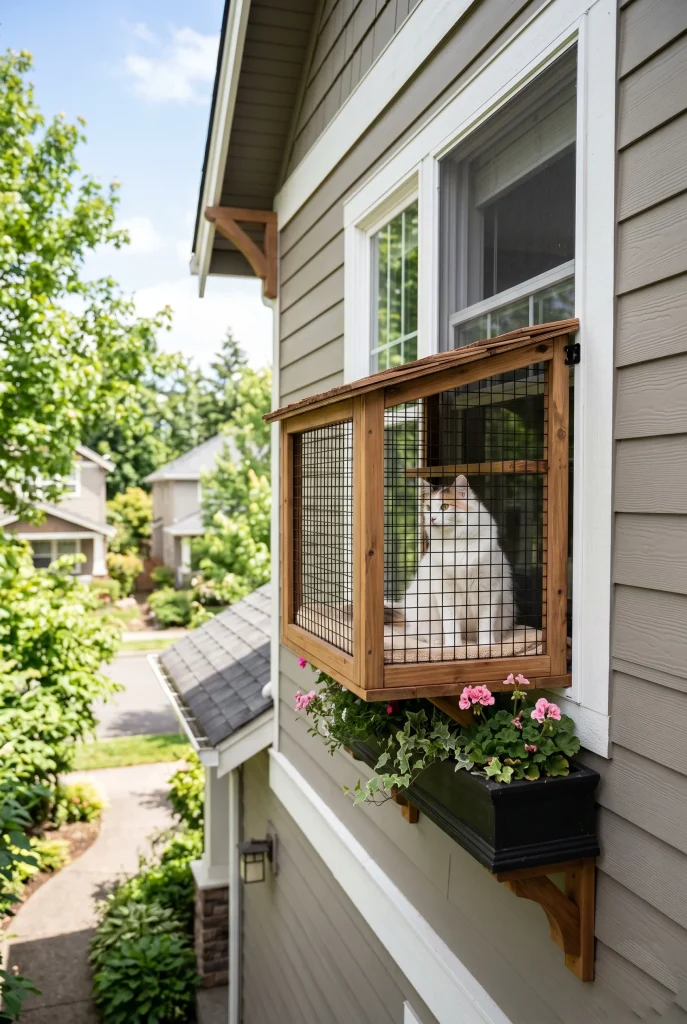
2. Balcony Catio Enclosure
Got a balcony? You’re halfway there. Stretching mesh or cat netting across the balcony railings and ceiling turns it into a full outdoor room for your cat. No structural changes needed.
This works especially well in urban apartments where yard space isn’t an option. Your cat gets a full balcony to roam instead of just a window ledge. Add some shelves and a hammock and it becomes prime cat real estate.
Use UV-resistant mesh to keep it durable through all seasons. Most balcony kits cost between $50 and $150 depending on the size.
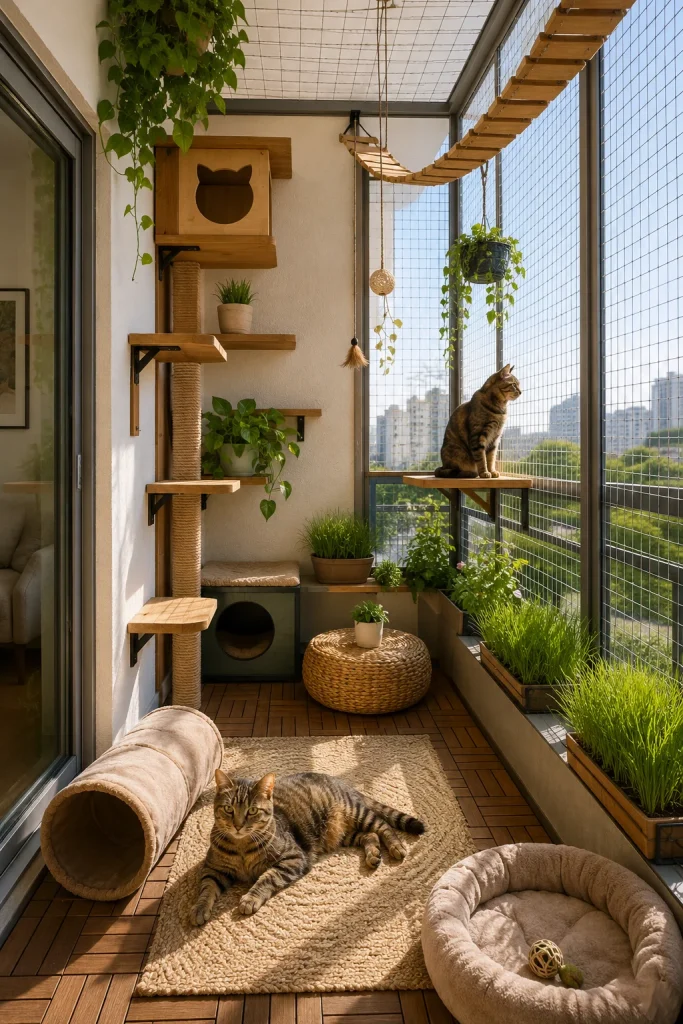
3. Lean-To Catio
A lean-to catio leans against an existing wall or fence, using it as one side of the structure. That cuts your build time and material costs in half. It’s a smart use of space without taking over your whole yard.
Most lean-to catios are 6 to 8 feet tall, giving your cat vertical climbing space. Add a few shelves at different heights and they’ll be in heaven. You can connect it to the house through a cat flap for easy access.
This style suits narrow side yards and garden edges perfectly. It blends into the garden without looking like an eyesore.
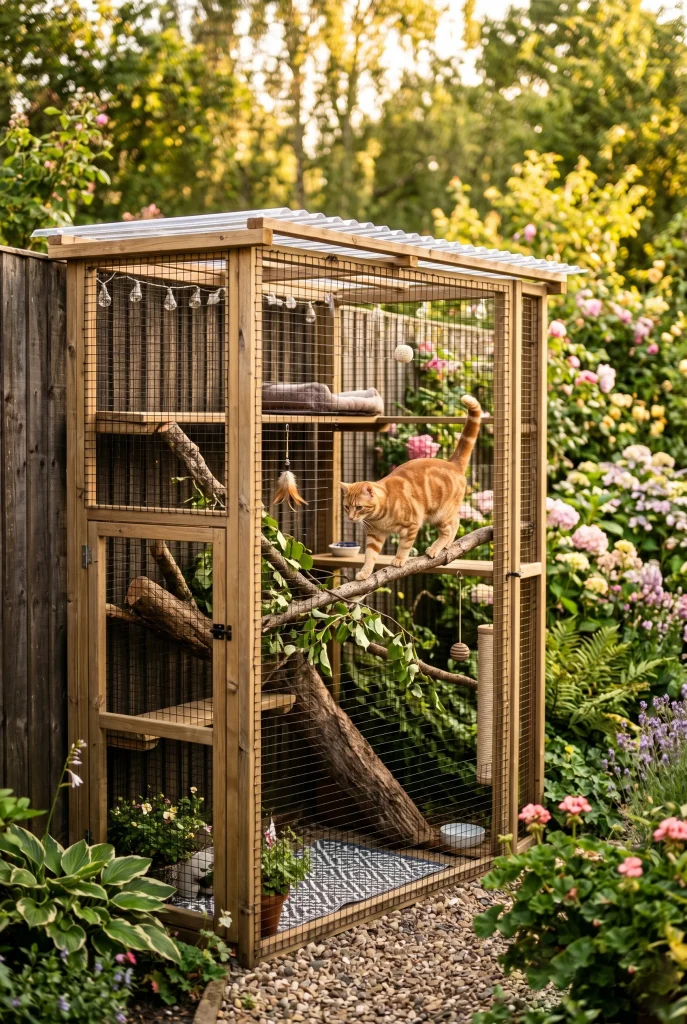
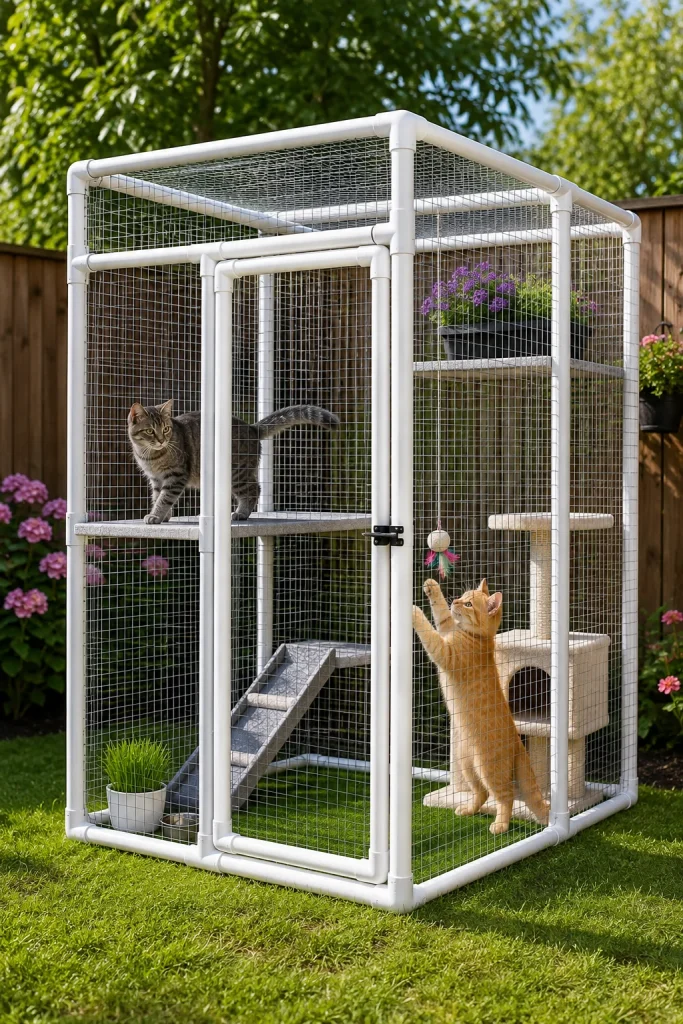
4. PVC Pipe Catio
PVC pipes are cheap, light, and easy to work with. You don’t need power tools or woodworking skills to put this together. Cut the pipes to size, connect them with corner joints, and stretch wire mesh over the frame.
A basic PVC catio can cost as little as $50 to $80 in materials. It’s not the sturdiest option for long-term use, but it works brilliantly as a starter build or a moveable outdoor pen. You can break it down and store it in winter too.
Great for renters who can’t make permanent changes to the property.
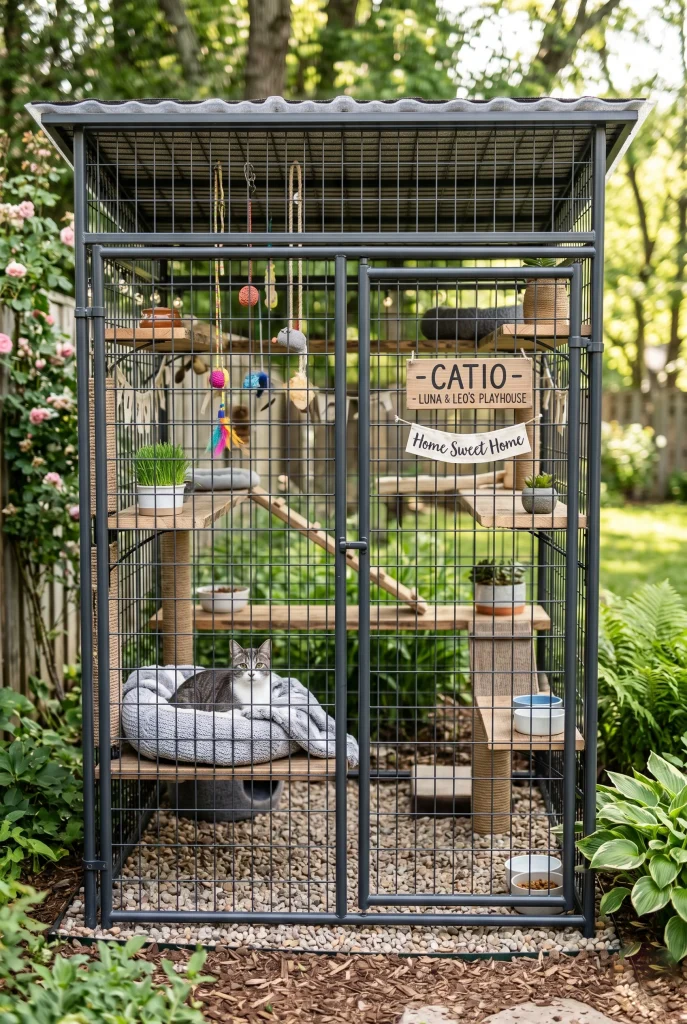
5. Dog Kennel Conversion
A secondhand dog kennel from Facebook Marketplace or a garage sale makes a ready-made catio frame. Line the inside with cat shelves, rope scratching posts, and a cozy bed. Connect it to a cat flap and you’ve got a full outdoor cat room for under $100.
The metal frame is already sturdy and weatherproof. Add a shade cloth on top to block harsh afternoon sun. Your cat gets a safe outdoor space and you get a budget win.
This is one of the fastest builds on this list. Most people finish it in an afternoon.
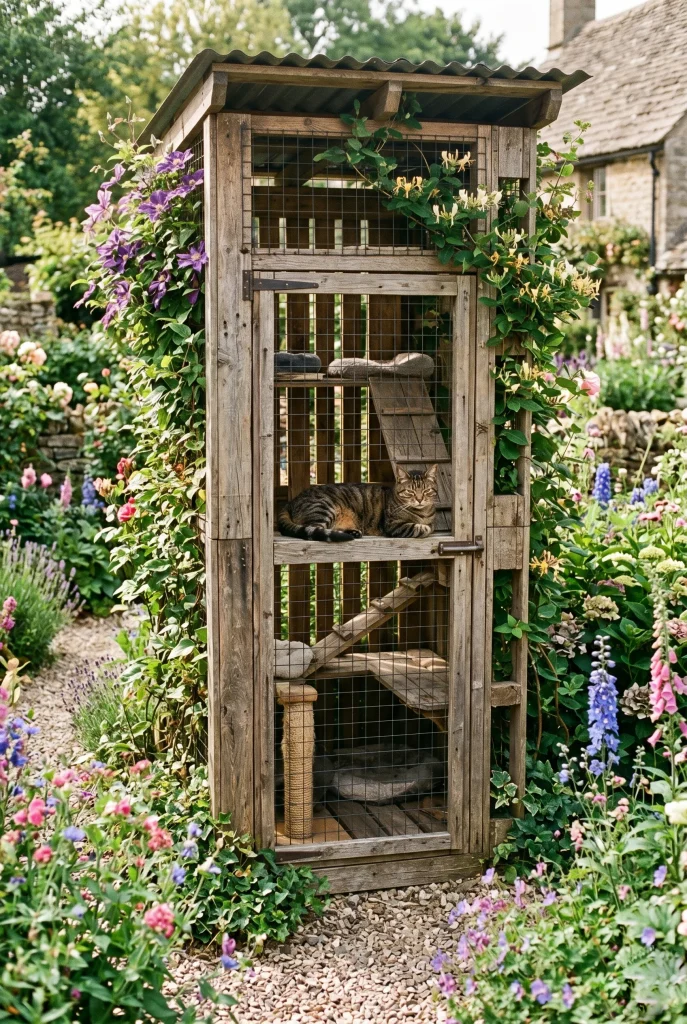
6. Pallet Wood Catio
Free pallets turn into a solid catio with some basic tools. Sand them down, screw them together, and line the frame with hardware mesh. The rustic look actually fits beautifully in cottage-style gardens.
You can usually find free pallets outside hardware stores or on local Facebook groups. A full pallet catio can cost almost nothing if you source materials well. Just make sure pallets are heat-treated (marked HT), not chemically treated.
Add a hinged door and a simple roof to keep rain out. It’s one of the most satisfying DIY builds on this list.
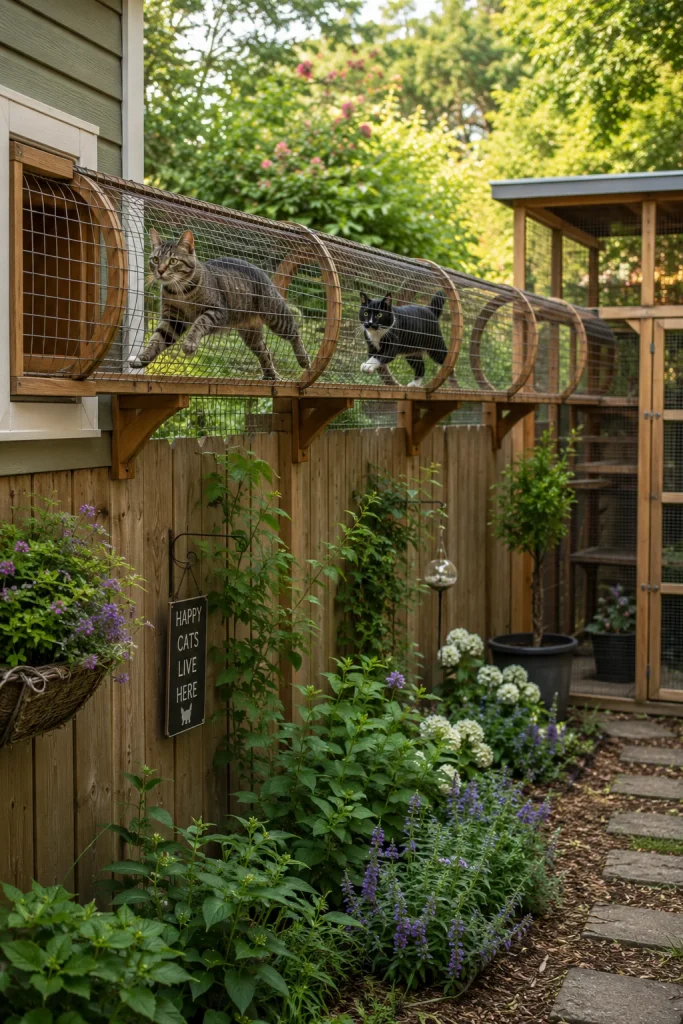
7. Cat Tunnel Run
A cat tunnel run connects your home to a catio pod or garden enclosure. Your cat walks through the tunnel like it’s their own private corridor. It keeps them off the ground and away from garden predators.
Tunnels work especially well across larger yards where the main enclosure sits far from the house. Build them at fence height so they double as a garden feature. Use pressure-treated wood and galvanized mesh for long-lasting outdoor use.
Most tunnels are 12 to 18 inches wide, giving cats comfortable walking space. Add turns and corners to make it more interesting for curious cats.
8. Garden Path Tunnel System
Take the tunnel idea further with a full garden path system. This links multiple pods and platforms across your yard through a network of enclosed tunnels. Your cat gets an entire outdoor course to explore.
It sounds complex, but you build it section by section over time. Start with one tunnel from the house and add pods and extensions as your budget allows. Think of it like building train tracks for your cat.
This style works brilliantly in larger suburban backyards. It also makes a stunning garden feature that visitors always notice.
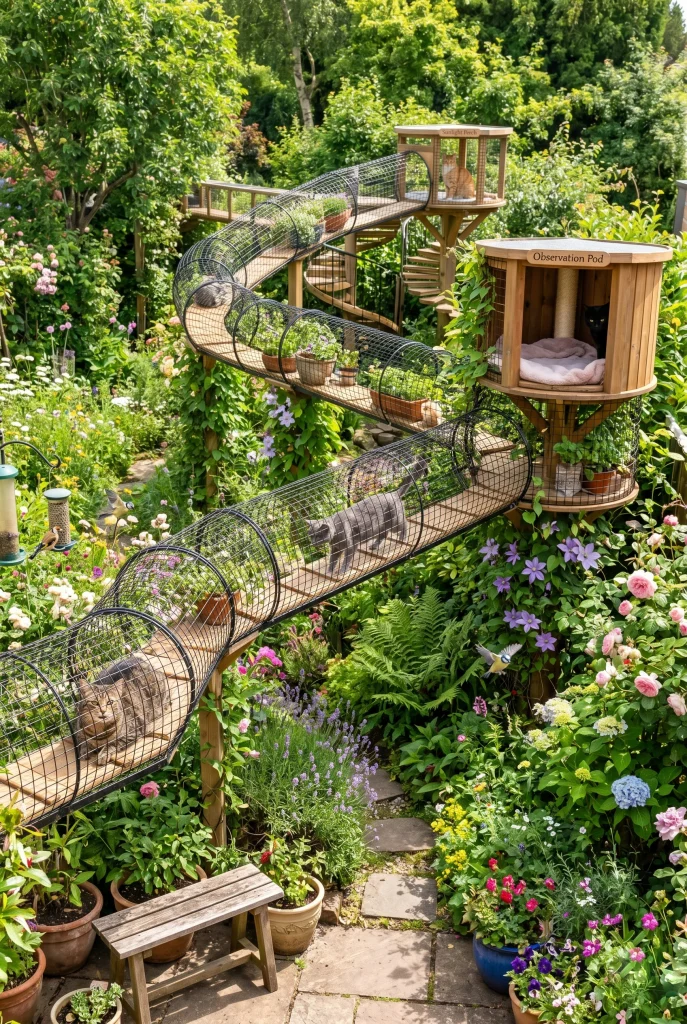
9. Raised Catwalk Tunnel
A raised catwalk sits above ground level on timber posts. Your cat walks through it at 3 to 4 feet off the ground, giving them a bird’s-eye view of the garden. It’s particularly useful if you have dogs or other animals at ground level.
Build the frame from treated pine and use galvanized mesh on all sides and the top. Leave the bottom open with a fine mesh floor so your cat can feel the air beneath their paws. Cats absolutely love the elevation.
Connect it to a window or upper-level cat flap for seamless indoor-outdoor access.
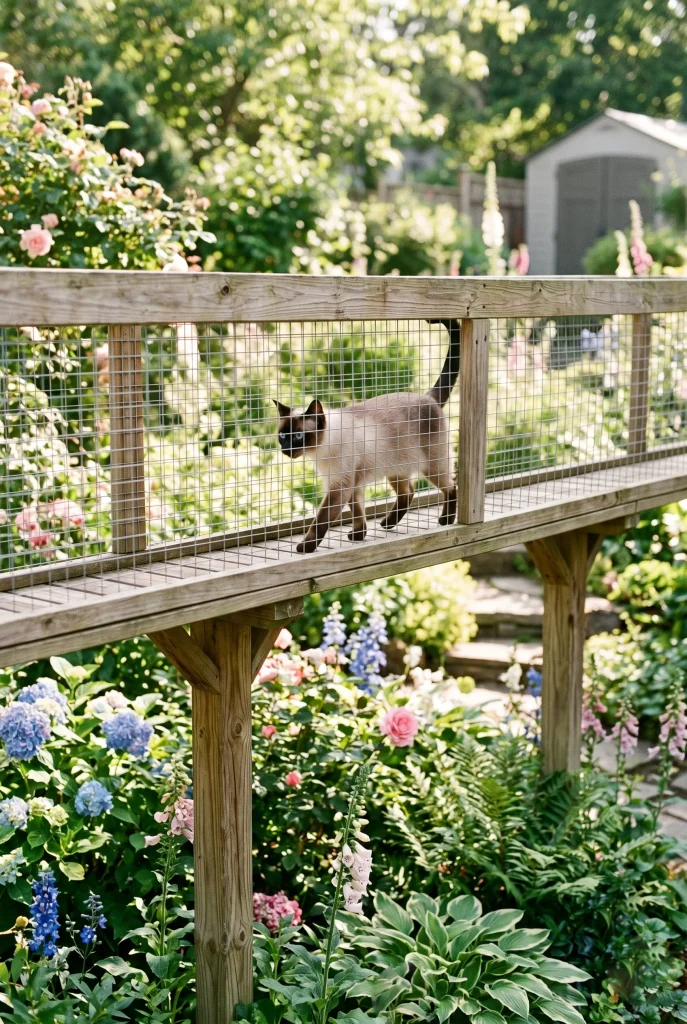
10. Walk-In Garden Catio
A walk-in catio is big enough for you to step inside with your cat. It’s part cat enclosure, part outdoor sitting area. You can have your morning coffee in there while your cat does their morning patrol.
These structures usually measure 8×10 feet or larger. Build them with a timber frame, galvanized hardware mesh, and a solid roof section for shade. Add a proper door with a latch so your cat can’t accidentally let themselves out.
Plant cat-safe plants inside like cat grass, catnip, and valerian. Your cat will treat it like their personal jungle.
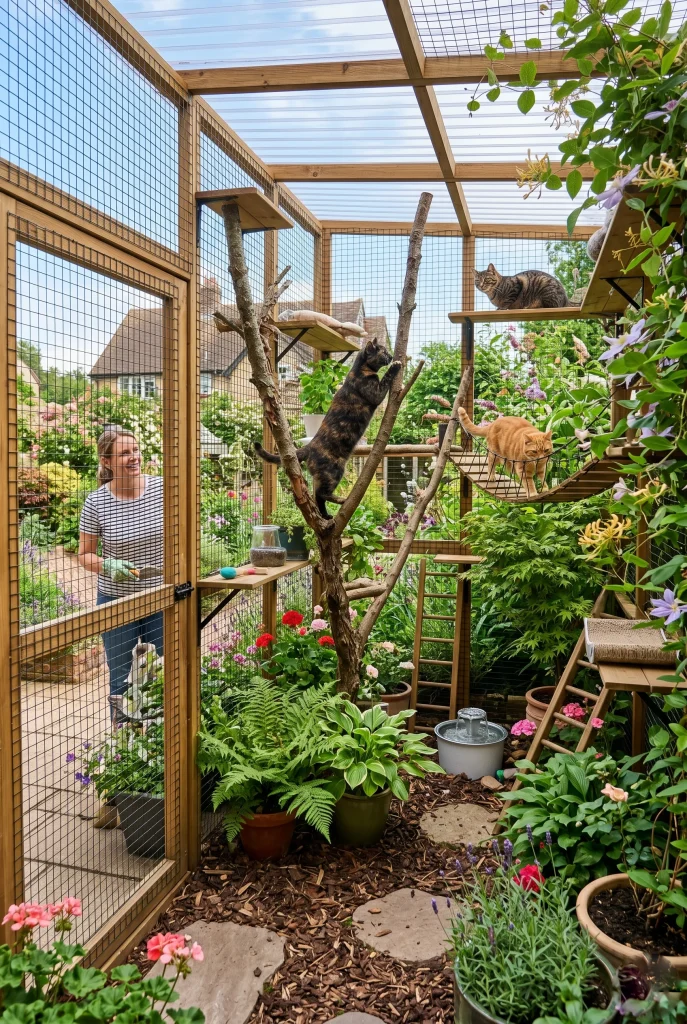
11. Multi-Level Catio Tower
Cats are natural climbers. A multi-level catio tower gives them the vertical space they crave. Stack 3 to 4 platforms at different heights with ramps or rope ladders between them.
At the top, add a covered sleeping platform with a view of the yard. At the bottom, keep a ground-level area with grass or a sand pit. Every level offers a different experience.
This design works well in smaller footprint yards because it goes up instead of out. It’s also visually impressive and photographs brilliantly for Pinterest.
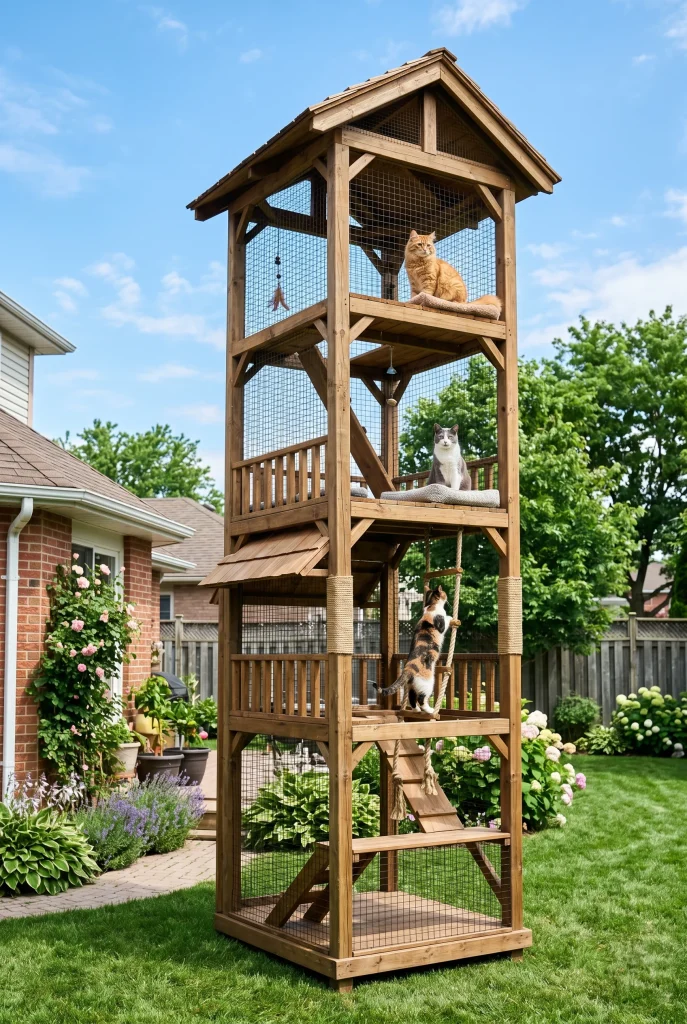
12. Attached Sunroom Catio
An attached sunroom catio is the most upscale design on this list. It attaches directly to your home like a conservatory and connects through a sliding door or cat flap. Think polycarbonate roofing, timber framing, and mesh walls.
Your cat gets a warm, light-filled outdoor room all year round. On sunny days it heats up naturally, making it a favourite winter spot. On hot days, open mesh panels keep the airflow moving.
This is a bigger investment, costing anywhere from $500 to $2000+ depending on size. But it adds real value to your home too.
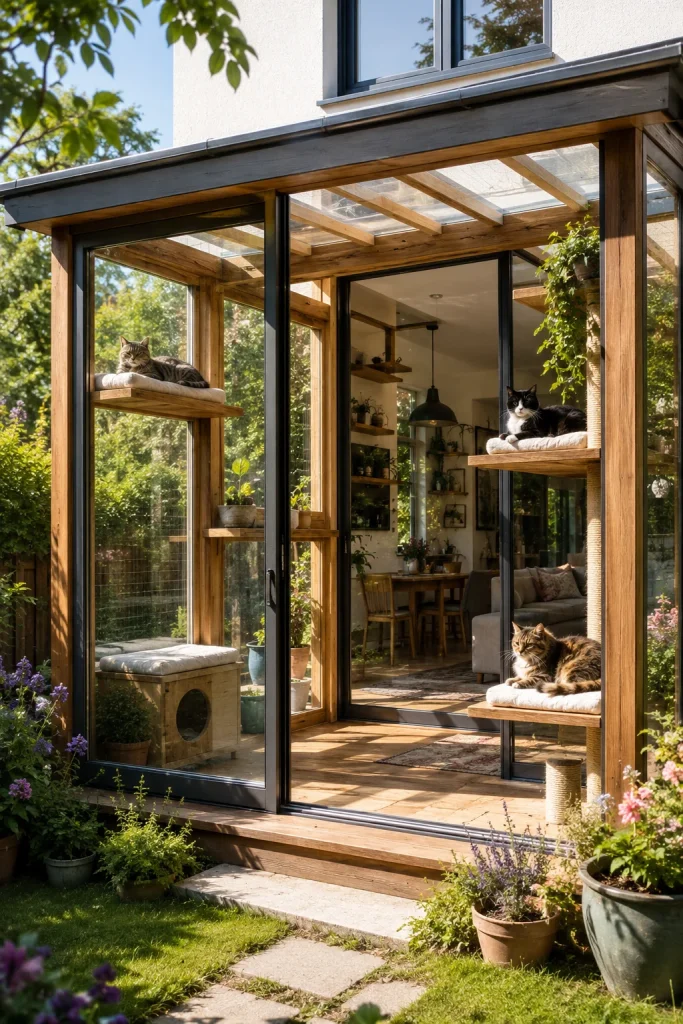
13. Jungle Theme Catio
Fill your catio with cat-safe tropical plants like spider plants, bamboo, and Boston ferns. Add thick climbing branches for a real jungle feel. Your cat will spend hours exploring every corner.
Keep the plants in pots so you can rotate them easily. Use natural rope on scratching posts and climbing frames to keep the aesthetic consistent. Add a small water feature for ambient sound, cats love the sound of running water.
This theme photographs beautifully and gets serious Pinterest engagement.
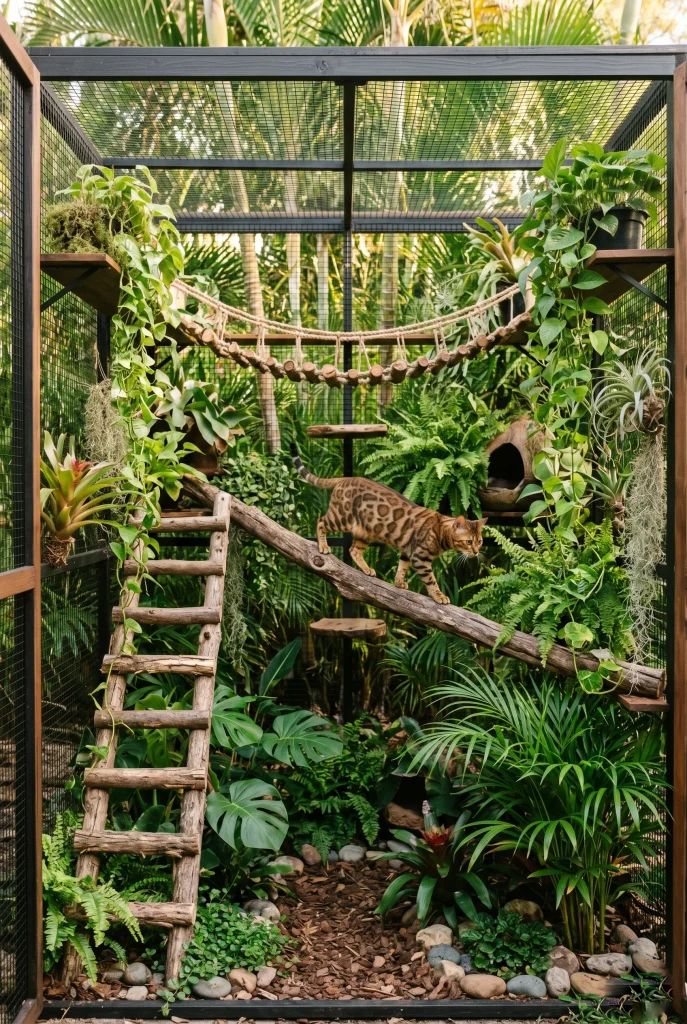
14. Zen Garden Catio
Keep it calm and minimal with a zen garden design. Use pale gravel, smooth wooden platforms, and bamboo accents. The clean lines make a striking visual without overwhelming your cat or your space.
Add a solar-powered water fountain for your cat to drink from outdoors. Keep the colour palette neutral: natural wood, white, and green. Less is genuinely more with this style.
This design appeals strongly to the interior design crowd on Pinterest.
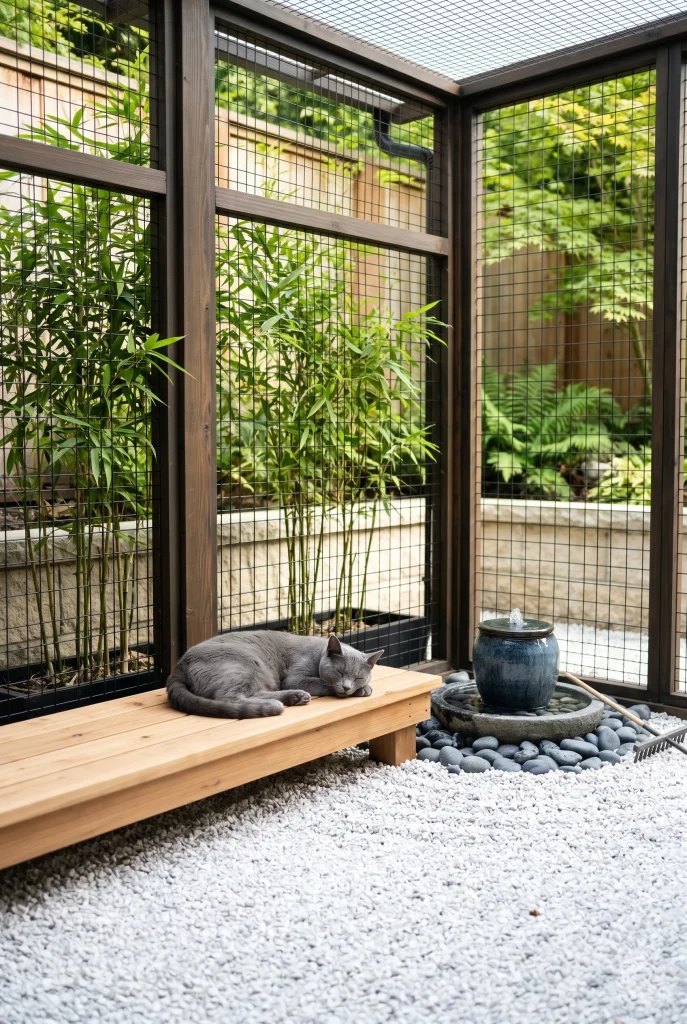
15. Farmhouse Style Catio
Shiplap timber, a corrugated metal roof, and window boxes full of catmint give this design serious farmhouse energy. It looks like a mini cottage sitting in your garden. Your cat lives better than most humans.
Paint it in classic farmhouse colours: white, sage green, or navy. Add a small weather vane on top for extra character. This style blends seamlessly into cottage gardens and traditional home styles.
It’s one of the most pinned catio aesthetics right now.
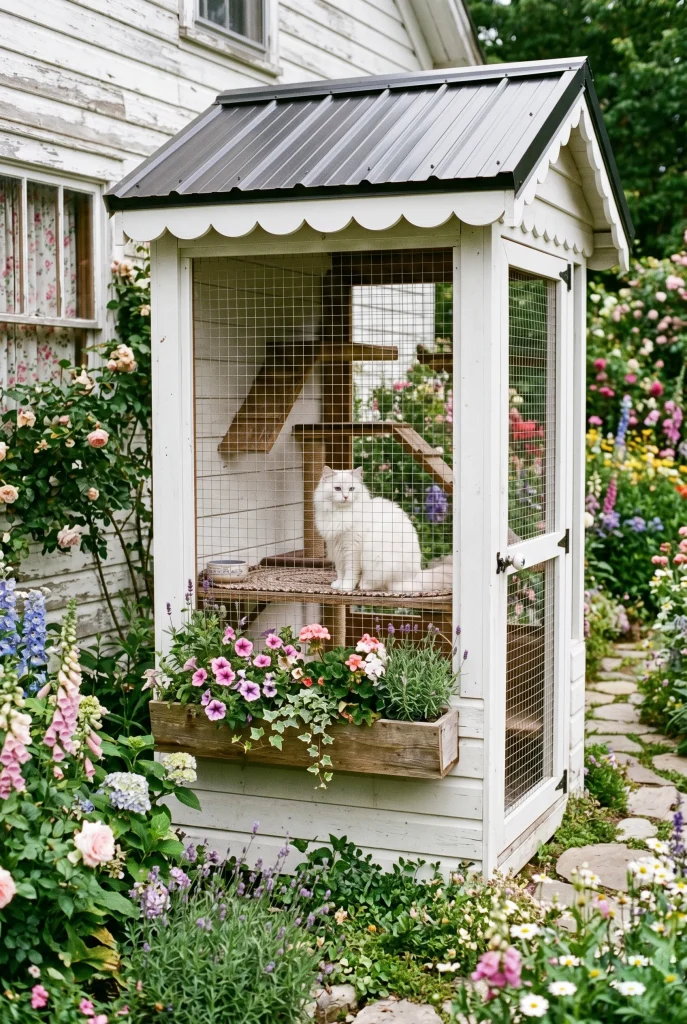
16. Modern Minimalist Catio
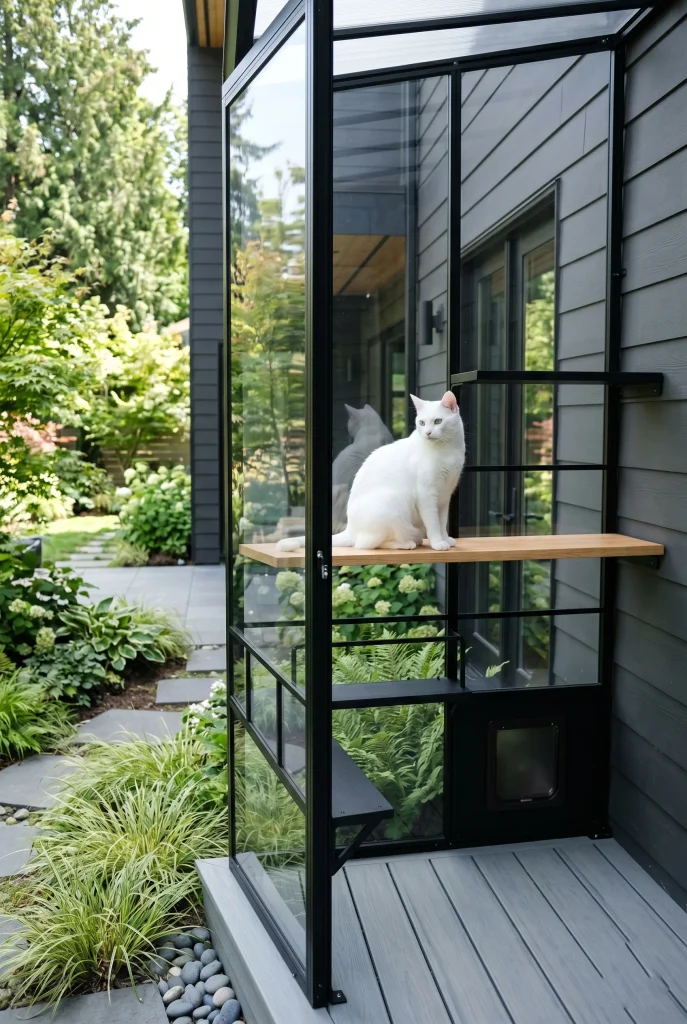
Black powder-coated steel framing and polycarbonate panels create a contemporary outdoor enclosure. It looks like a piece of modern architecture sitting in your garden. Clean, sharp, and stylish.
Use floating wooden shelves inside rather than traditional ramps. Keep accessories minimal: one hammock, one feeding station, one scratching post. The design speaks for itself.
This style suits modern homes with clean architectural lines perfectly.
17. Built-In Cat Grass Garden
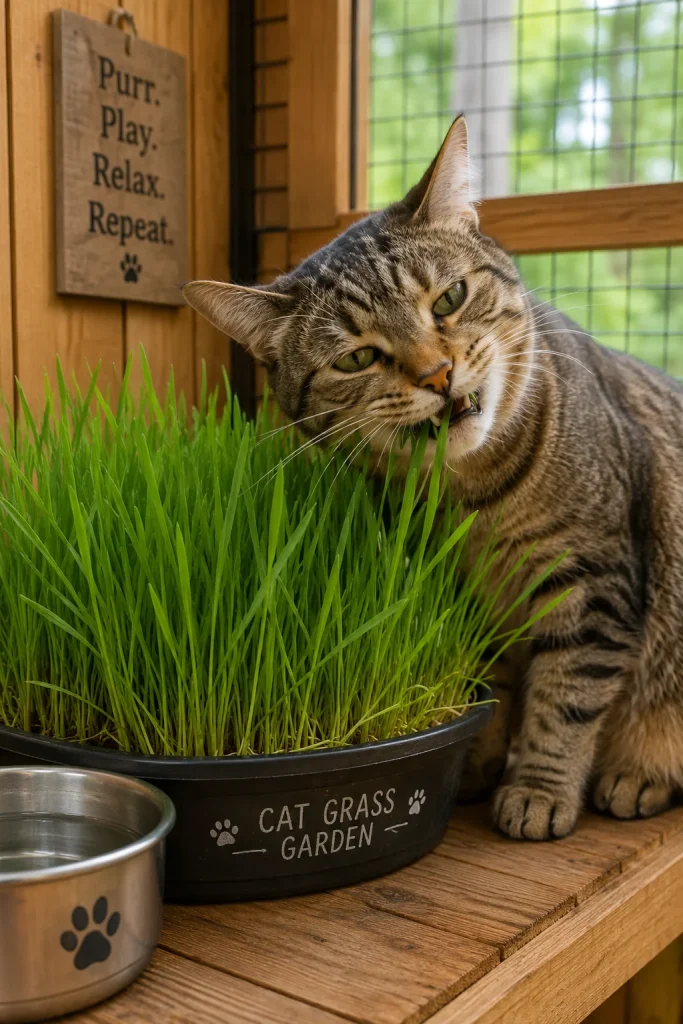
Cat grass isn’t just a treat, it’s a digestive aid. Build a small raised planting bed inside your catio and keep it stocked with wheat grass, oat grass, or barley grass. Your cat will graze naturally, just like outdoor cats do.
It takes 7 to 10 days to grow a fresh tray from seed. Rotate two trays so one is always growing while your cat eats the other. This costs almost nothing and your cat will obsess over it.
18. Hammock Perch
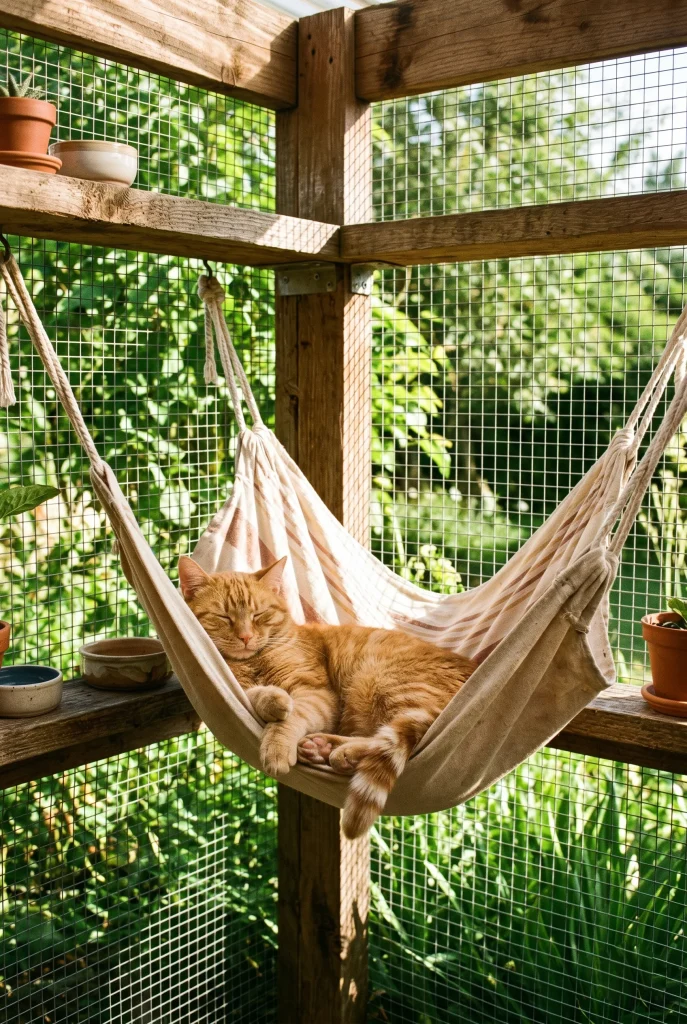
Every catio needs a hammock. Cats sleep up to 16 hours a day and they want to do it somewhere elevated and warm. A simple canvas or rope hammock hung at window height gives them the perfect nap spot.
Buy one or sew one from an old piece of canvas. Attach it with S-hooks to the catio frame. It takes 10 minutes to install and becomes their favourite spot within hours.
19. Bird Watching Shelf
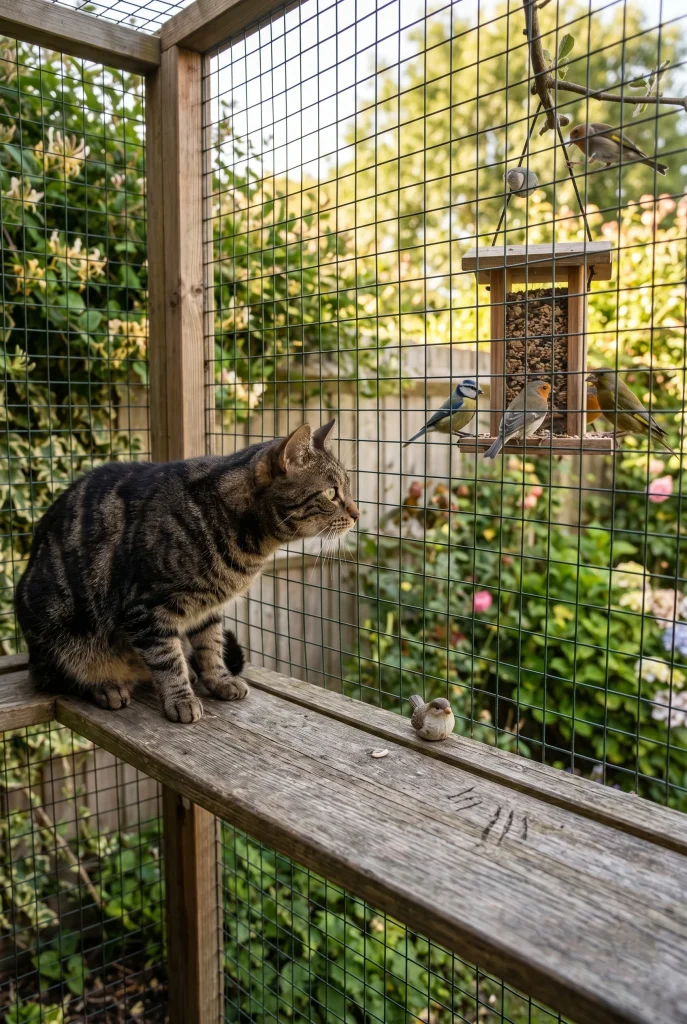
Place a bird feeder just outside your catio mesh, right at shelf height. Your cat gets hours of live entertainment watching birds come and go. It’s like Netflix, but with birds.
Position a wide wooden shelf at the perfect viewing angle. Make it at least 18 inches wide so your cat can sit and stretch out comfortably. This one feature alone makes a catio worth building.
20. Insulated Winter Catio Pod
If you live somewhere with cold winters, add an insulated sleeping pod inside your catio. Line a small wooden box with closed-cell foam and a removable fleece cover. Your cat stays warm outdoors even in cold weather.
Add a self-heating cat mat inside that uses your cat’s own body heat, no electricity needed. This lets your cat use the catio year-round, not just in summer. A warm pod also makes outdoor cats much more likely to actually use the space.
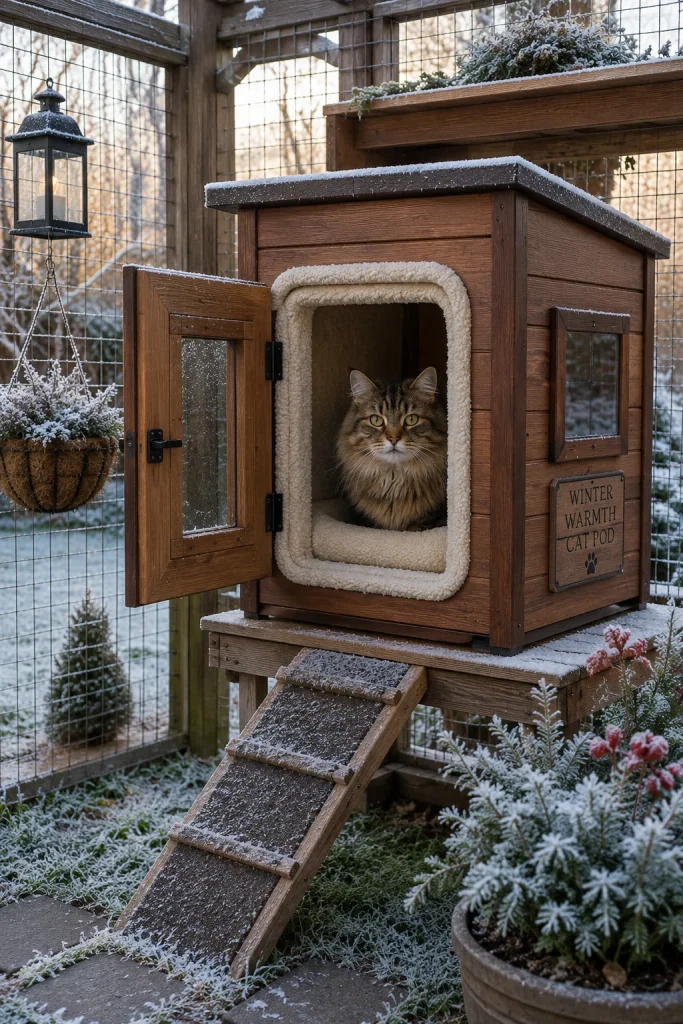
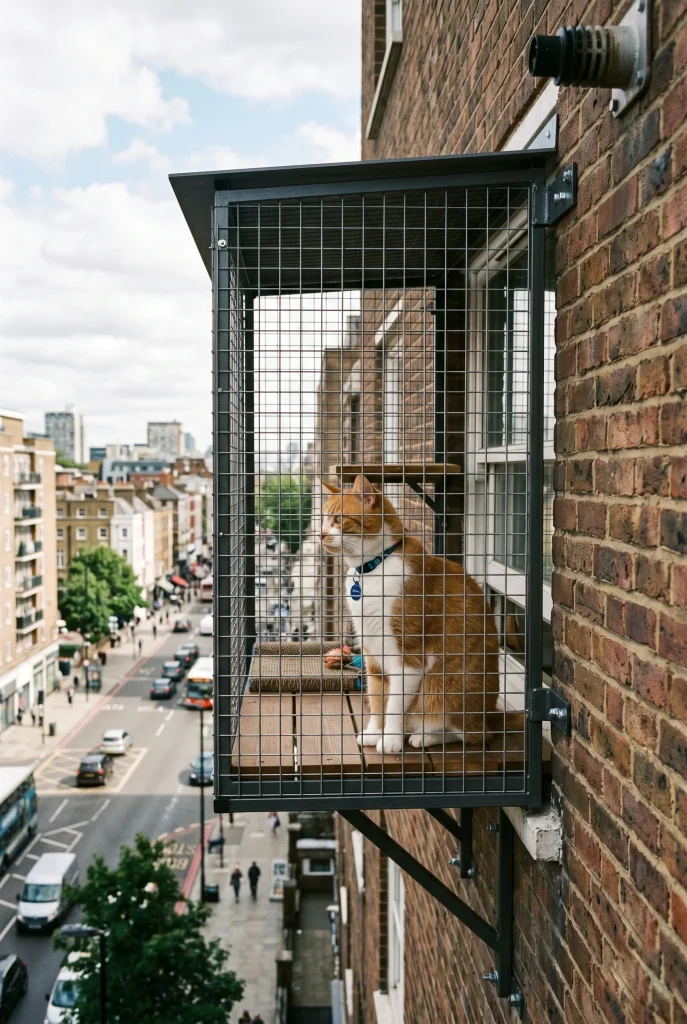
21. Apartment Catio (No Balcony)
No balcony? No yard? Still possible. A window-mounted catio cage bolts directly to your external window frame. Your cat climbs through the open window into their secure outdoor cage.
Use heavy-duty metal mesh and ensure it’s rated to hold your cat’s weight plus some. Most window catios support up to 50 pounds. Check with your building management first if you’re renting.
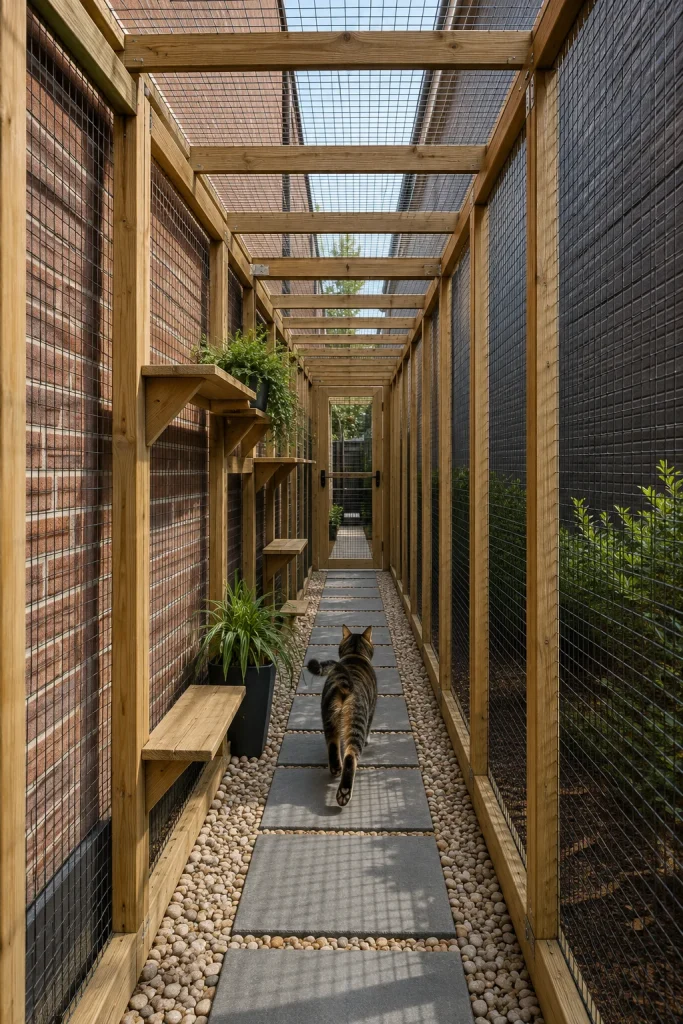
22. Townhouse Side Passage Catio
That narrow side passage between your house and the fence? It’s wasted space unless you’ve got a cat. Enclose both ends with mesh gates and add a roof mesh cover across the top. Your cat gets a long, narrow run that’s perfect for sprinting and exploring.
Side passage catios are low-cost because the walls already exist. You only need to build two end gates and a roof. Most people finish this build in a single weekend.
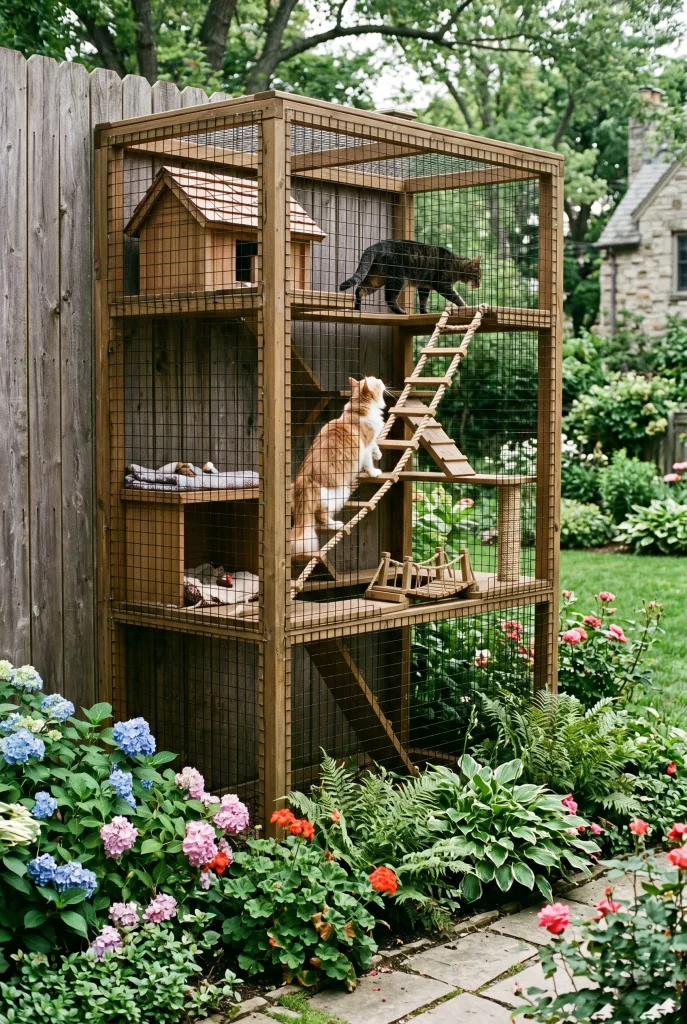
23. Backyard Corner Catio
Use a backyard corner to your advantage. Two fence panels form two walls automatically. You only need to build two additional walls to close off the structure. That saves time, money, and materials.
Corner catios tend to be naturally sheltered from wind. Add a shade sail across the roof for hot days. Position it near a tree for natural shade and something interesting for your cat to watch.
24. Choosing the Right Mesh
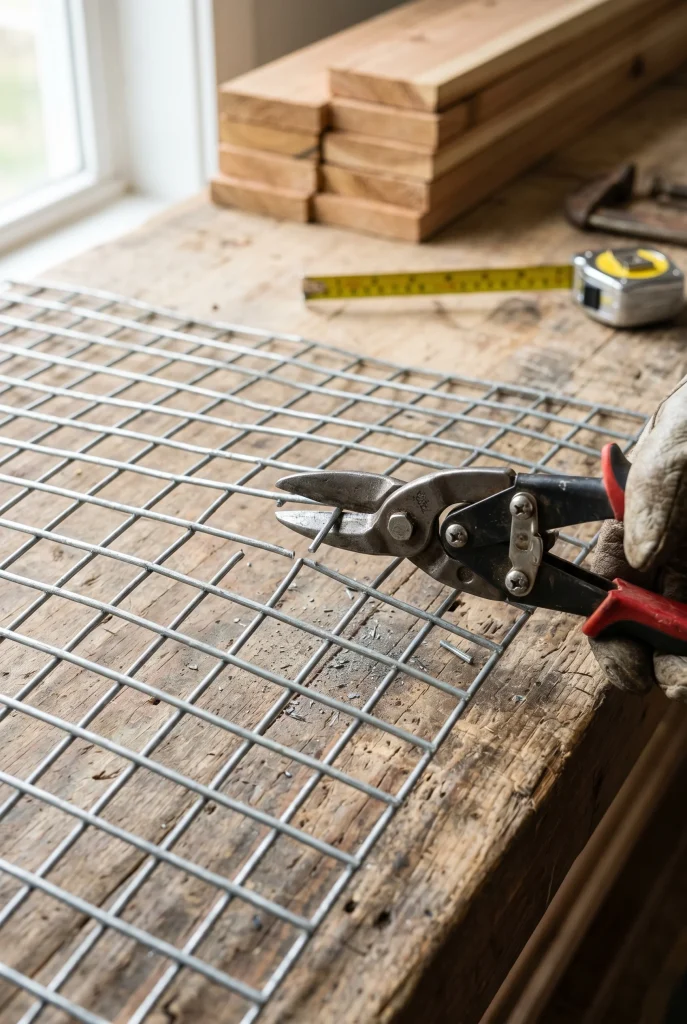
Not all mesh is equal. Chicken wire rusts quickly and cats can push through it over time. Use galvanized hardware cloth with a half-inch or smaller grid size. It’s stronger, safer, and lasts far longer outdoors.
For the roof, use the same galvanized mesh or add a polycarbonate sheet for a weatherproof section. Keep mesh edges folded inward and secured with staples so there are no sharp points. Safety matters more than cost savings here.
25. Cat-Safe Plants for Your Catio
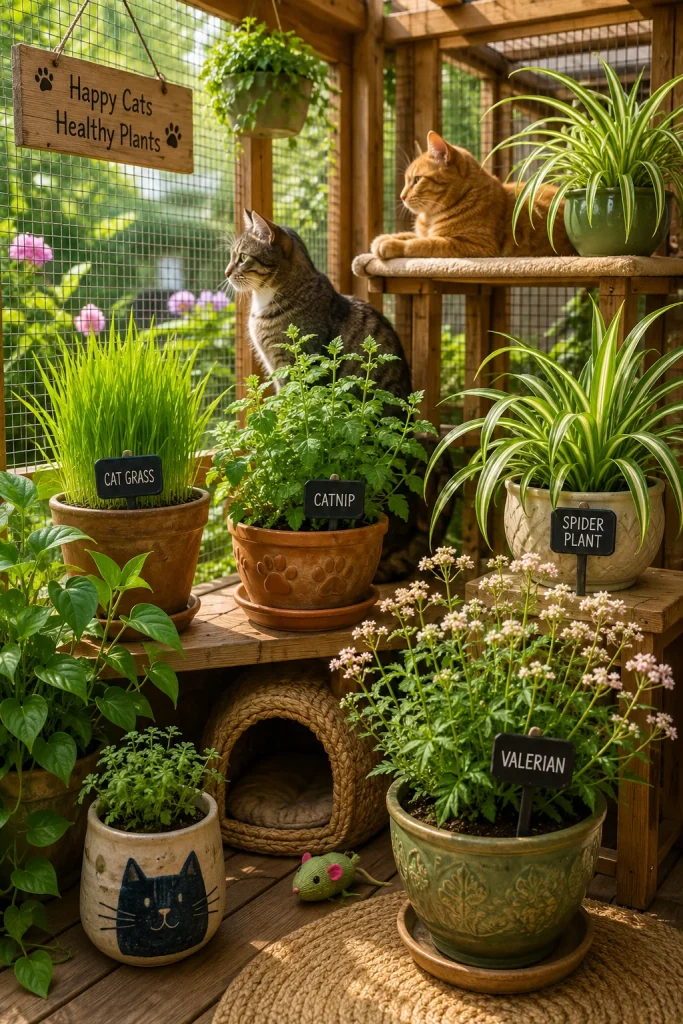
Not all plants are safe for cats. Avoid lilies, tulips, and azaleas inside or around your catio. Stick to cat-safe options: catnip, valerian, cat grass, spider plants, and rosemary.
Label your pots so guests and other household members know what’s in there. Refresh plants seasonally as some die back in winter. A living plant wall inside a catio looks striking and keeps the air fresh.
26. Predator-Proofing Your Catio
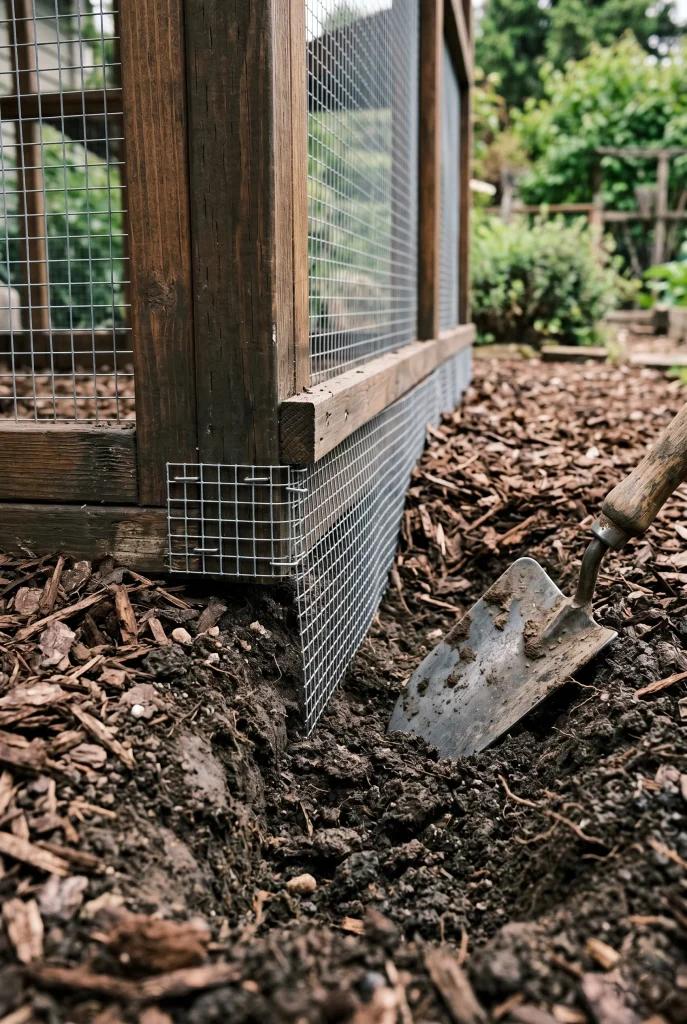
If you have foxes, raccoons, or neighbourhood dogs nearby, predator-proofing is non-negotiable. Bury a mesh apron 12 inches underground around the catio perimeter. This stops anything from digging underneath the walls.
Use double-latched doors instead of single. Predators are smarter than most people realise. A basic spring latch won’t stop a determined fox.
Check the mesh monthly for any holes or loose sections. A small gap can become a big problem fast.
27. Adding a Cat Door for Easy Access
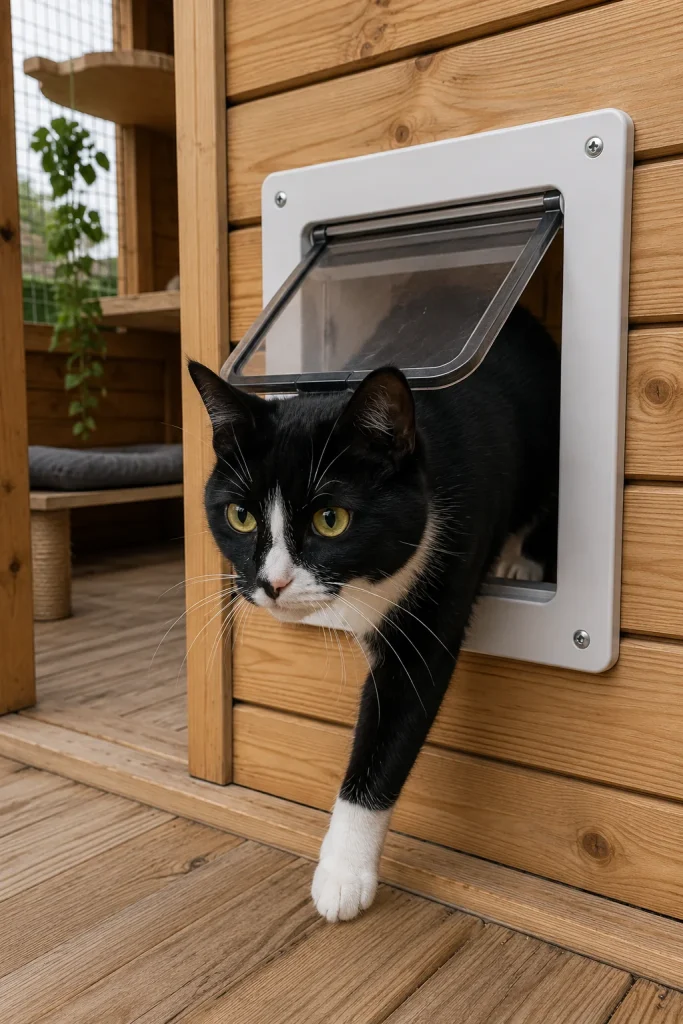
The best catio in the world is useless if your cat won’t use it. A microchip cat flap cuts out the guesswork. It only opens for your cat’s microchip, keeping neighbourhood cats and wildlife out.
Install it at ground level in the catio wall that connects to your home. Measure the door opening to your cat’s height plus 2 inches. Train your cat to use it with treats placed just on the other side.
Most cats figure it out within 48 hours. After that, they come and go entirely on their own terms.
Conclusion
Building a catio is one of the best things you can do for your cat’s wellbeing and your own peace of mind. Your cat stops staring longingly out the window and starts actually living outdoors, safely. Whether you go for a $50 PVC window box or a full walk-in garden room, any catio beats no catio. Pick the design that fits your space, your budget, and your cat’s personality. Then build it this weekend. Your cat’s already waiting.