
Your fabric scraps have been sitting in a bin for months. They’re waiting on a project that never starts. Big sewing plans need a free weekend, and those are rare when you’re juggling everything else.
These simple things to sew skip that problem on purpose. Each project uses less than half a yard of fabric, so leftover pieces finally have a job. Most come together in under an hour, and a few take less than twenty minutes.
You’ll fold a bookmark that grips the page instead of sliding out. You’ll stitch a pouch small enough for lip balm, coins, or a stray hair tie. None of it calls for a pattern to trace or a zipper foot you’ve never used.
Ten small projects wait below, and each one fits into a lunch break or a slow evening. Pull out whatever scraps are closest and thread up the machine. That bin is about to get a lot smaller.
1. Fold a Fabric Corner Bookmark to Mark Your Page
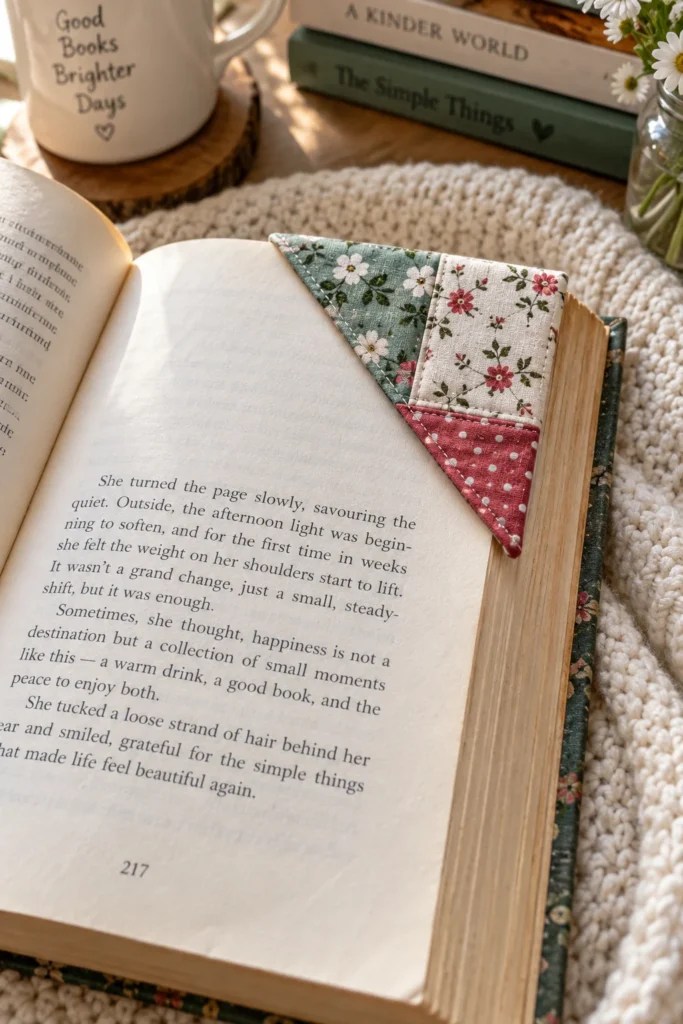
You don’t need a sewing machine for this one. A needle and five stitches get the job done.
This little pocket slides over any page corner and stays put through a bumpy commute or the bottom of your bag.
What you need:
- A five-inch cotton square
- A needle and thread
- About ten quiet minutes
Grab whatever scrap is too small for anything else. This is where it finally earns its keep.
Fold your fabric square in half diagonally to make a triangle, right side out.
Fold the two bottom corners up to meet the top point, making a smaller triangle pocket.
Stitch along both open edges close to the fold, leaving the diagonal side open for the page.
2. Stitch a Ribbon-Tail Bookmark in One Sitting
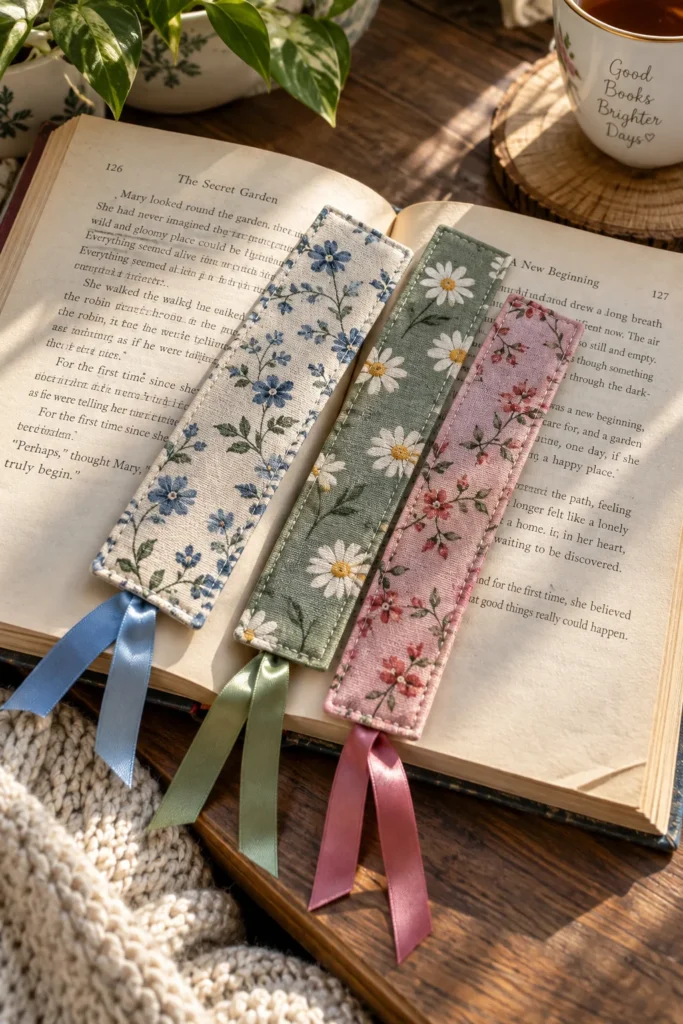
A ribbon tail turns a plain rectangle into something you’d actually give away. It stops looking like a scrap project the moment the ribbon shows up.
- Cut two fabric rectangles, two inches by six inches.
- Layer them right sides together with a ribbon tucked between the short ends, then stitch around three sides.
- Flip it right side out through the gap and press it flat.
Skip the iron and the corners curl no matter how straight you sewed. This one’s quick enough to finish while pasta water comes to a boil.
3. Sew a Set of Mix-and-Match Fabric Coasters
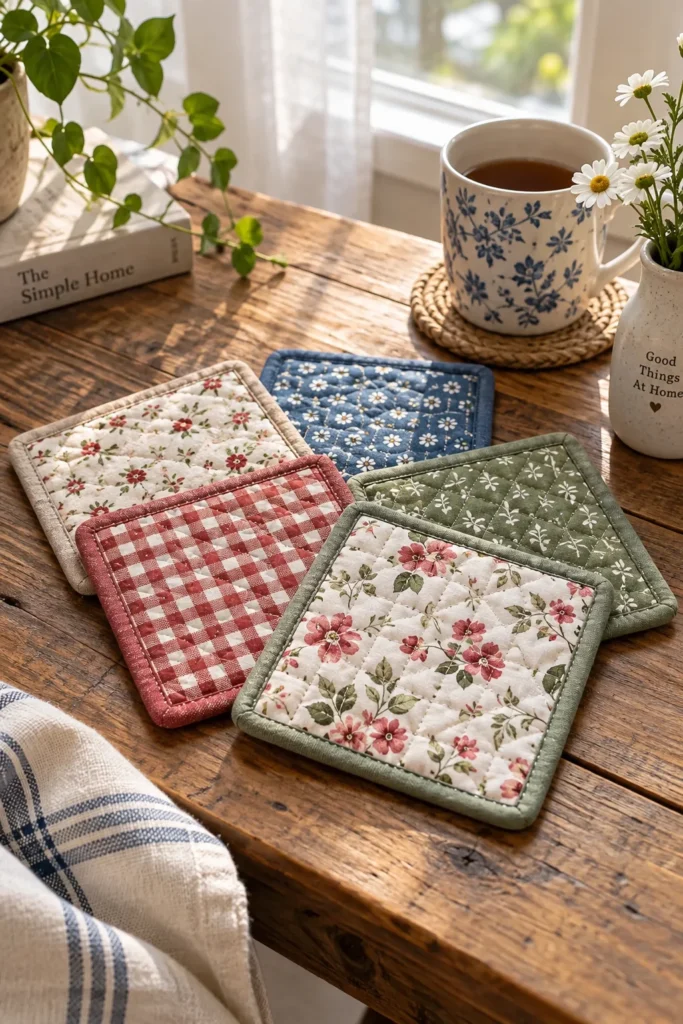
Most coasters skip the batting and pay for it later, when a water ring shows up on the table underneath. A layer of cotton batting between two fabric squares is what actually protects the wood.
- Cut two 4-inch fabric squares and one square of batting for each coaster.
- Layer the fabric right sides together with batting on top, then stitch around the edge and leave a gap.
- Turn everything right side out, press flat, and topstitch the opening shut.
Mix five different prints in one set and it reads as intentional, not like whatever scraps were left over.
What to grab first
4. Make a Chapstick Cozy Keychain for Your Bag
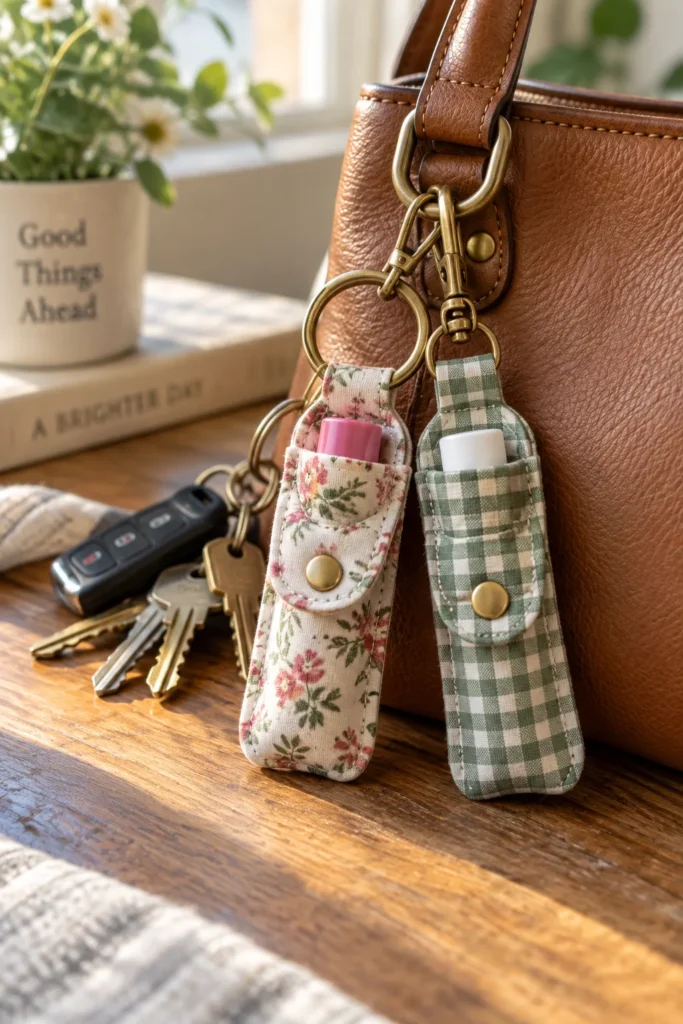
Chapstick always sinks to the bottom of a bag, buried under receipts and old gum wrappers. A cozy clipped to your keys or your bag strap fixes that for good.
- Cut a fabric rectangle about three by five inches.
- Fold it around a tube of chapstick to check the fit before sewing.
- Stitch the long side and one short end, leaving the top open, then flip it right side out.
- Add a keychain clip through a small fabric loop at the seam.
Sew two at once. One for your bag, one to hand off as a stocking stuffer nobody expects.
5. Sew Reusable Cotton Rounds That Replace Cotton Pads
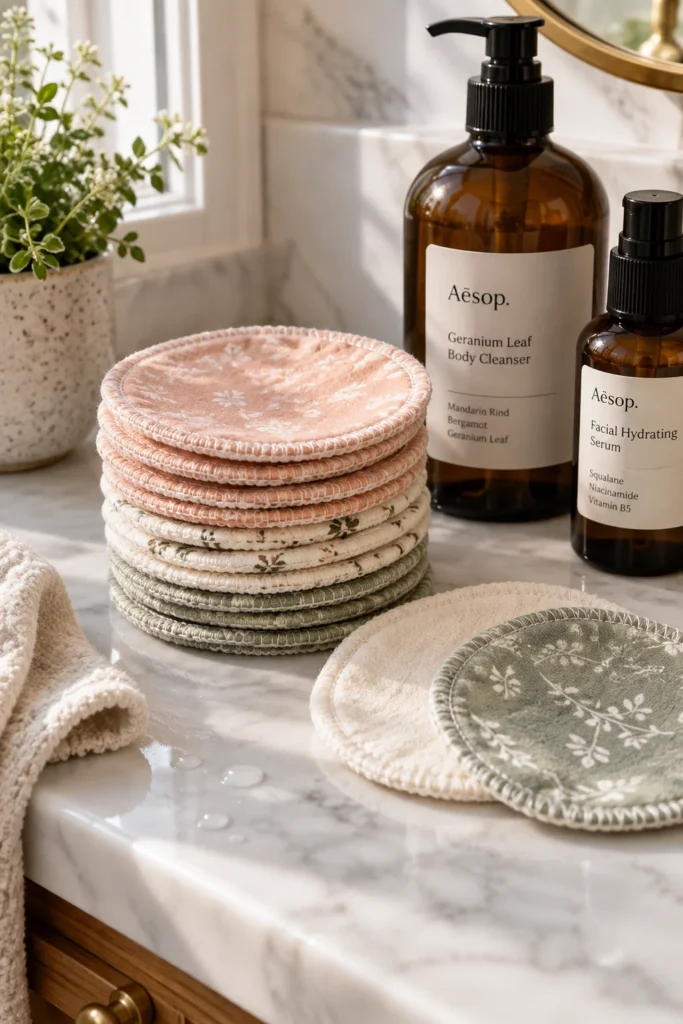
Disposable cotton rounds disappear fast, and the cost adds up more than most people notice over a year. A stack of five or six reusable ones ends that steady drip of spending.
Pair two fabric layers for best results:
- Soft flannel or terry cloth against the skin
- A cotton print on the back so they’re easy to spot in a drawer
Cut both layers into 3-inch circles, stitch around the edge with a small seam allowance, and leave a short gap to turn them right side out before closing it up.
Toss them in a mesh bag before washing so they don’t end up tangled with everything else.
💡 Quick Tip
Skip the fabric softener when you wash these. It coats the fibers and makes them less absorbent over time.
6. Stitch a Two-Pocket Travel Pouch for Tissues and Glasses
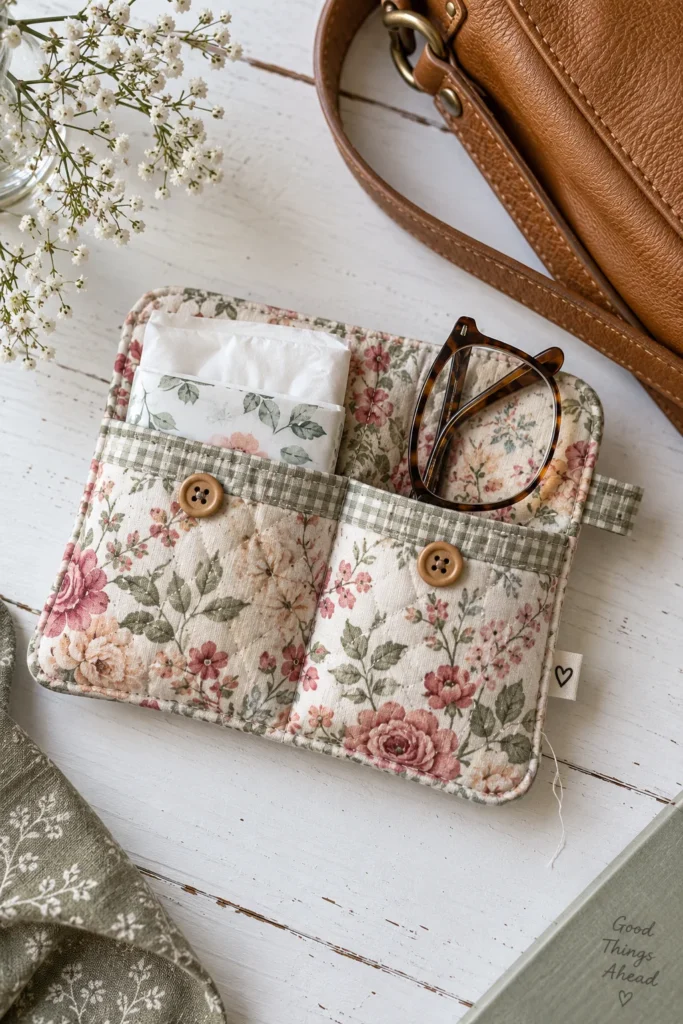
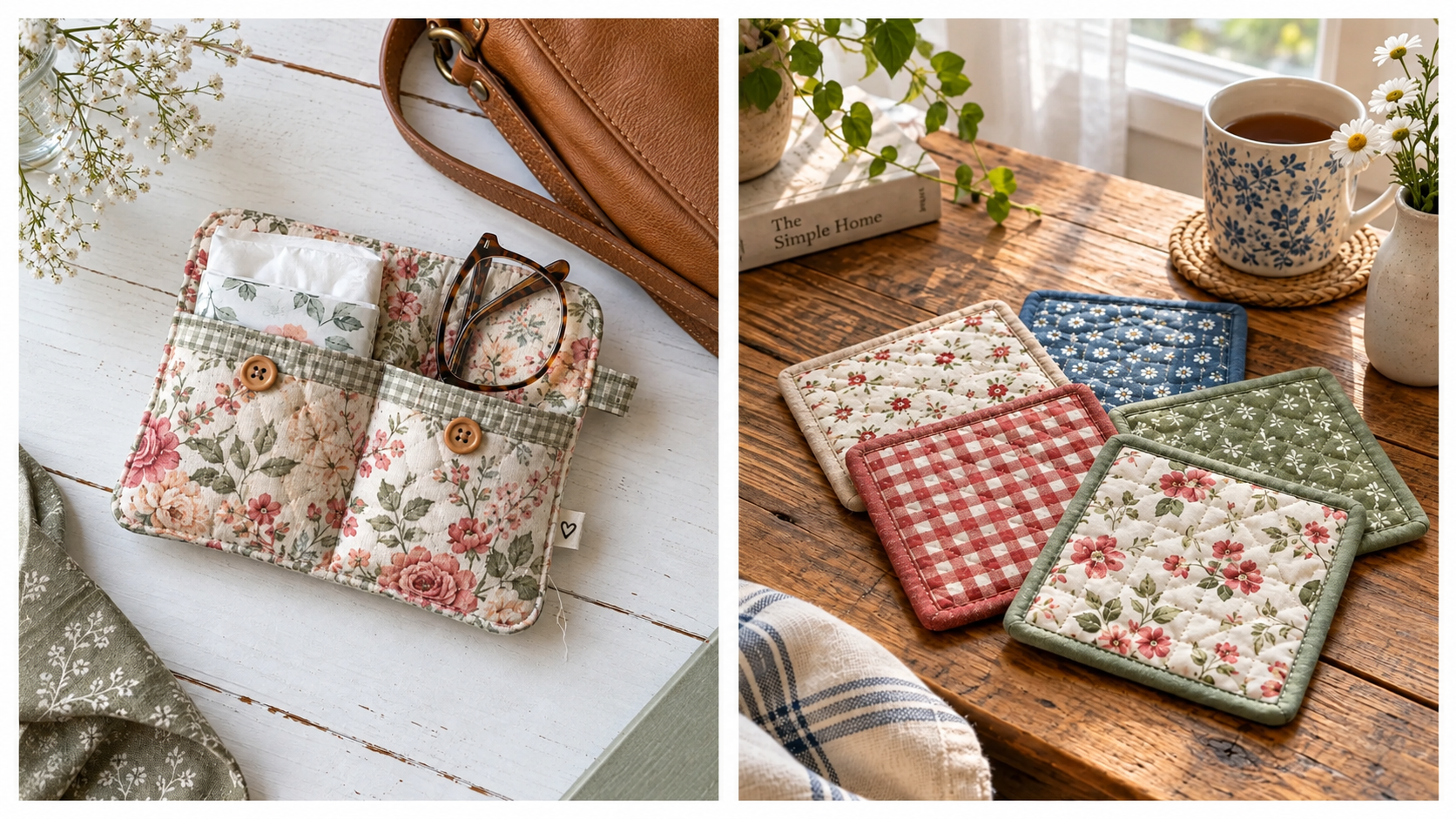
Cut one rectangle of quilted cotton, about seven by ten inches. Fold the two short ends toward the middle so they overlap slightly, then stitch down both long sides. That overlap makes two open pockets instead of one deep one.
Slide glasses into the top pocket and a small tissue pack into the bottom. Nothing shifts around and hunts for space at the bottom of your bag.
This one earns its spot in a diaper bag, a glovebox, or the front pocket of a carry-on.
Glasses and a crumpled tissue pack loose at the bottom of your bag.
Both tucked into their own pocket, easy to find without digging.
7. Sew a Drawstring Picnic Pouch That Doubles as a Gift Bag
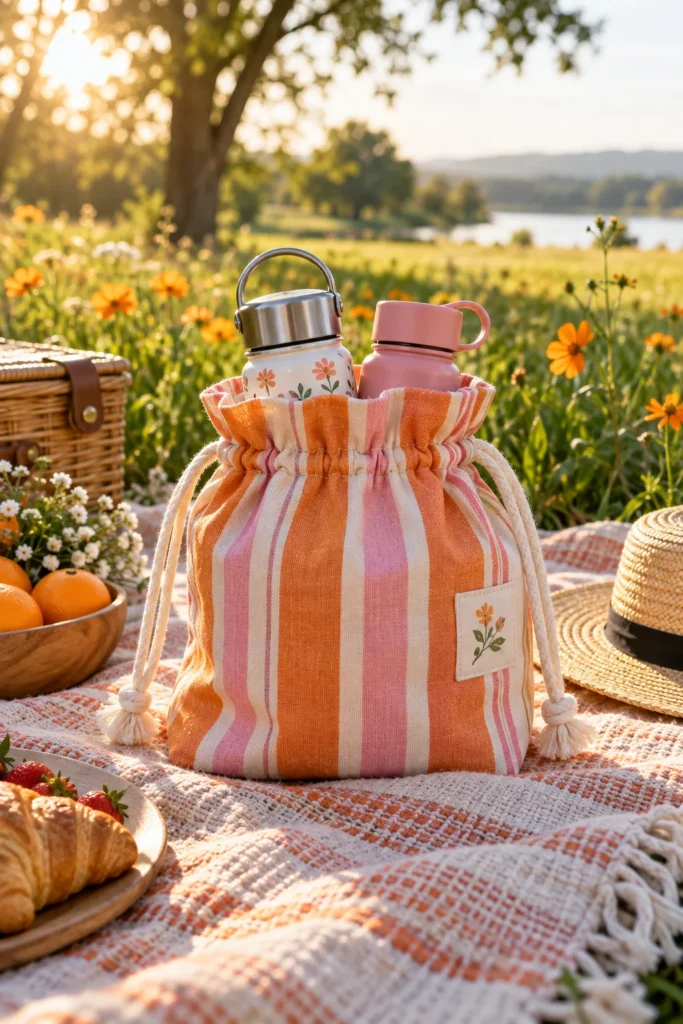
A drawstring pouch skips the zipper most beginners dread, and it still closes tight enough to hold two water bottles upright. Cut one wide rectangle of sturdy cotton, fold it in half, and stitch up both sides, leaving a small gap near the top on each edge for the cord.
Fold the top down twice to make a casing, stitch it in place, and thread cord through with a safety pin. Knot the ends and it’s done.
Tie a ribbon around a filled one and it doubles as a birthday gift bag, no wrapping paper required.
| Drawstring Pouch | Zip Pouch |
|---|---|
| Closes with a pull cord, no hardware needed. | Closes with a zipper, lies flat when open. |
| Good first project, no zipper foot required. | Takes a bit more practice to sew straight. |
| Best for picnics, produce, or gift wrapping. | Best for makeup, coins, or small tools. |
8. Fill a Lavender Sachet for a Drawer That Smells Good

Open a drawer that’s held the same shirts for months and there’s usually no smell at all, good or bad, just fabric. A small lavender sachet fixes that without a plug-in or a spray.
Cut two 4-inch fabric squares, stitch three sides together, fill it about halfway with dried lavender buds, then fold the raw edge in and stitch the last side shut.
Swap the lavender for cedar chips near wool sweaters, or dried rose petals if lavender’s not your scent.
A sachet only works in a closed space. Left out in the open, the scent fades within days.
9. Turn Leftover Scraps Into a No-Fuss Scrunchie
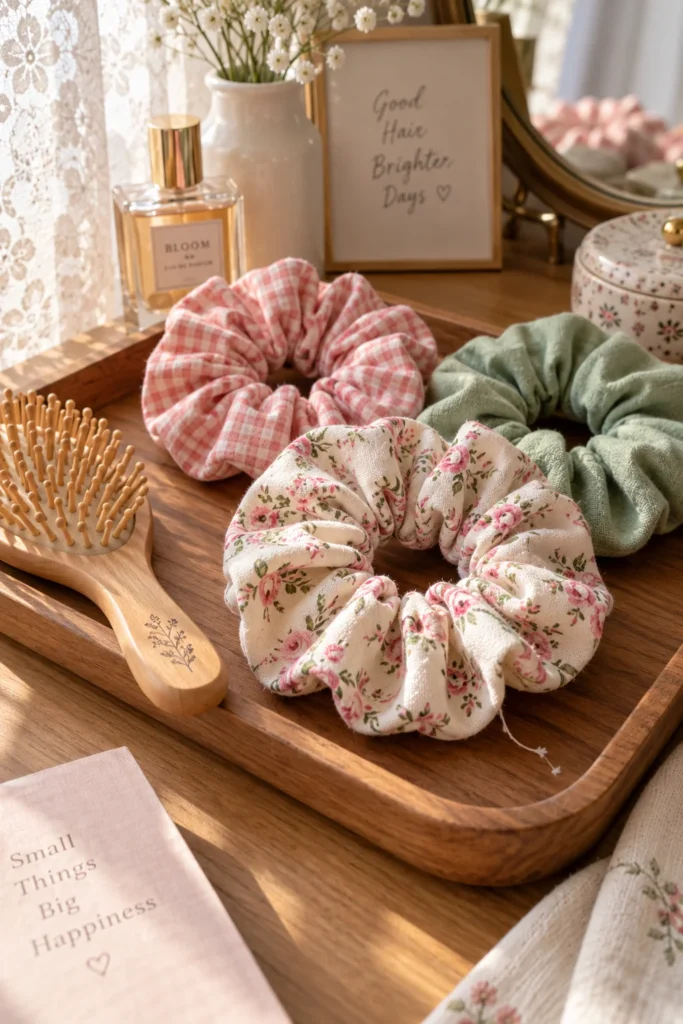
People assume a scrunchie needs a wide, decorative elastic. A plain quarter-inch elastic actually gathers the fabric fuller and holds its shape longer through the wash.
Cut a fabric strip about four inches wide and twenty inches long. Fold it lengthwise, right sides together, and stitch the long edge to make a tube.
Turn the tube right side out, thread elastic through with a safety pin, and knot the ends. Tuck the raw edges in and stitch the tube closed by hand.
One strip, one scrap of elastic, no pattern paper.
- ▸A fabric strip, four by twenty inches.
- ▸About ten inches of quarter-inch elastic.
- ▸A safety pin to thread the elastic through.
10. Sew a Zip-Top Coin Pouch From One Fat Quarter

A zip pouch this size holds exactly what a wallet’s coin pocket can’t: loose change, a spare key, two folded bills. One fat quarter makes two or three of these with fabric to spare.
Cut two rectangles about five by seven inches. Pin a zipper face down along one short edge of each piece, stitch it in place, then flip the fabric open and topstitch close to the zipper teeth.
Fold right sides together, unzip it partway, and stitch around the remaining three sides. Turn it right side out through the open zipper.
Trim the corners at an angle before turning, or they’ll look bunched instead of square.
Backstitch both ends of the zipper seam for reinforcement.
Trim corners at an angle before turning right side out.
Don’t use a zipper longer than the pouch opening.
Don’t skip pressing seams before topstitching.
Conclusion
Ten small projects, and not one needs a free weekend or a pattern from the store. That’s the point behind these simple things to sew. Grab whatever fabric’s already sitting in your bin, because one of these fits it.
Start with whichever one solves a problem you’re already dealing with. Chapstick that disappears into your bag, or a drawer that needs a little scent. Once it’s done, the next scrap pile only needs an hour, not a plan.
Save this list for the next time you’ve got fabric scraps and twenty free minutes.