

Most backyards have a chair that nobody really sits in. It looks fine, it gets used for ten minutes, and then everyone drifts back inside. A swing is different. Once there’s one hanging in the yard, people sit down and stay there until the mosquitoes win.
The good news is that a diy wooden swing is one of the friendlier builds for a weekend. A basic plank swing needs a saw, a drill, and some rope. The bigger porch swings and swing sets take more time, but the steps are still simple cuts and screws.
This list starts with the easiest builds and moves on to benches, frames, and a few small projects for tight spaces. Pick the one that fits your yard, your tools, and how many people you want sitting on it.
Cut a Single 2×10 Plank Swing and Hang It on Knotted Rope

One 2×10 is all the wood this swing needs.
Round the corners with a jigsaw, then sand every face and edge until your palm slides across without catching. Drill a hole near each end with a spade bit a little wider than your rope. Measure both holes from the same edges so the seat hangs level.
You’ll need:
- one 2×10 board
- outdoor-rated rope
- a drill with a spade bit
- sandpaper
Tie a knot under the seat so the rope can’t slip, and check the rope’s rating and your beam before anyone sits down.
Build a Two-Person Slatted Porch Swing From 2x4s

A porch swing with an upright back makes everyone sit like they’re waiting for a bus. The fix is in the angle, and building your own lets you set it.
Three small details decide how comfortable it feels:
- a seat deep enough to support your knees
- a back that leans a little instead of standing straight
- narrow gaps between slats so rain can drain
Cut every slat before you assemble, and sand the ends first. It’s much harder to do after the frame is together.
Cut two seat rails and two back rails, then angle the back rails to the lean you want.
Screw the seat slats across the rails. A scrap of wood makes a handy spacer for even gaps.
Add the back slats, then set the armrests at a height that’s easy on your elbows.
Attach the hanger hardware, tighten every screw, and sand any rough spots before you hang it.
Turn Two Pallets Into a Hanging Daybed Swing
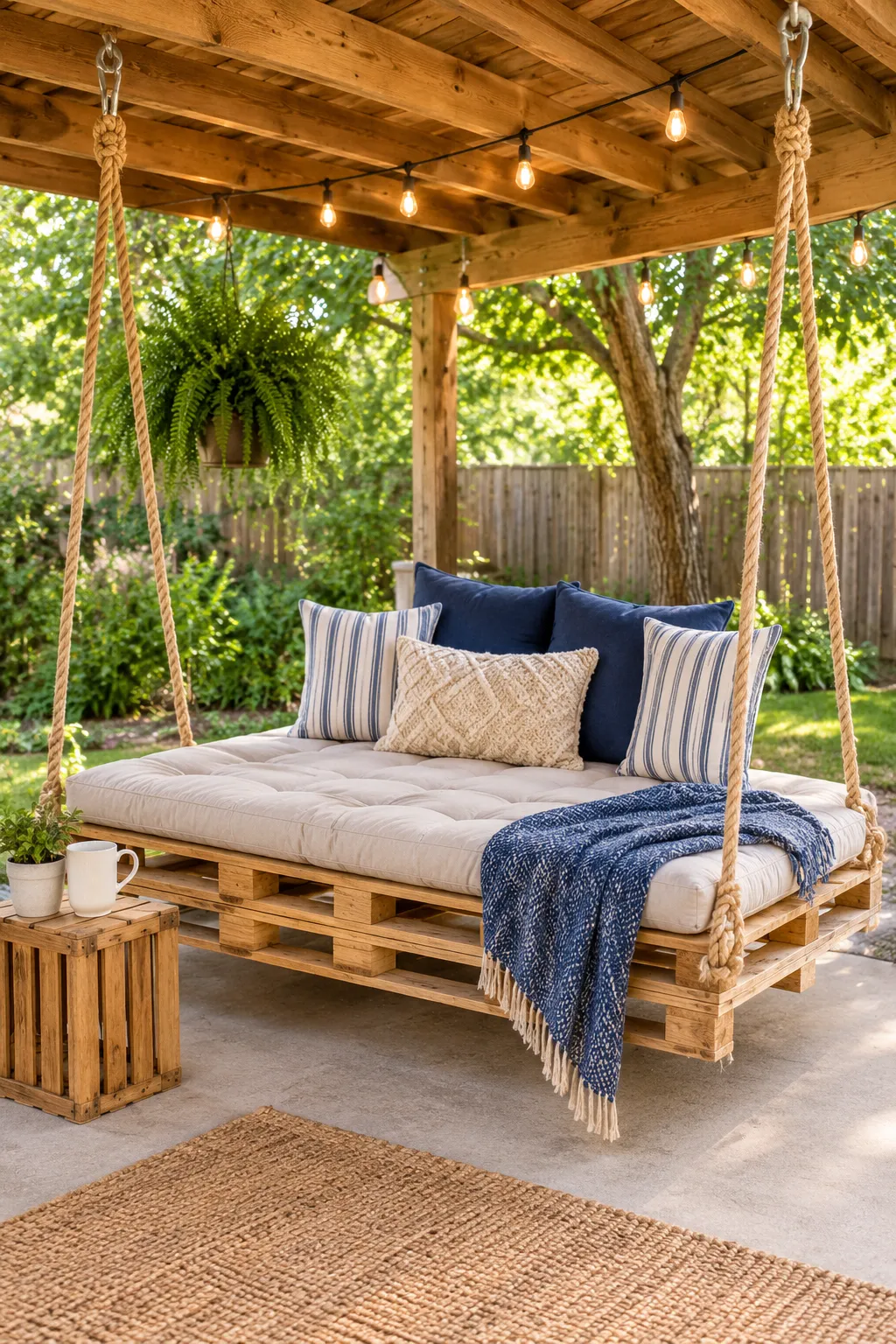
The mistake with pallet swings is grabbing whatever pallet is closest.
Look for the stamp first. HT means heat treated. Skip anything marked MB, because that means methyl bromide, and skip pallets with oil stains or a chemical smell. Local shops sometimes give clean ones away if you ask.
Once you have two good pallets, sand them well, since pallet wood is rough and splintery. Fasten one flat for the seat and one upright for the back, then add corner hardware and a deep cushion.
Raw pallets with raised nails, rough boards, and stamps nobody checked.
Nails pulled, boards sanded smooth, and a deep cushion ready for a long afternoon.
Frame a Backyard Pergola Swing From 4×4 Posts
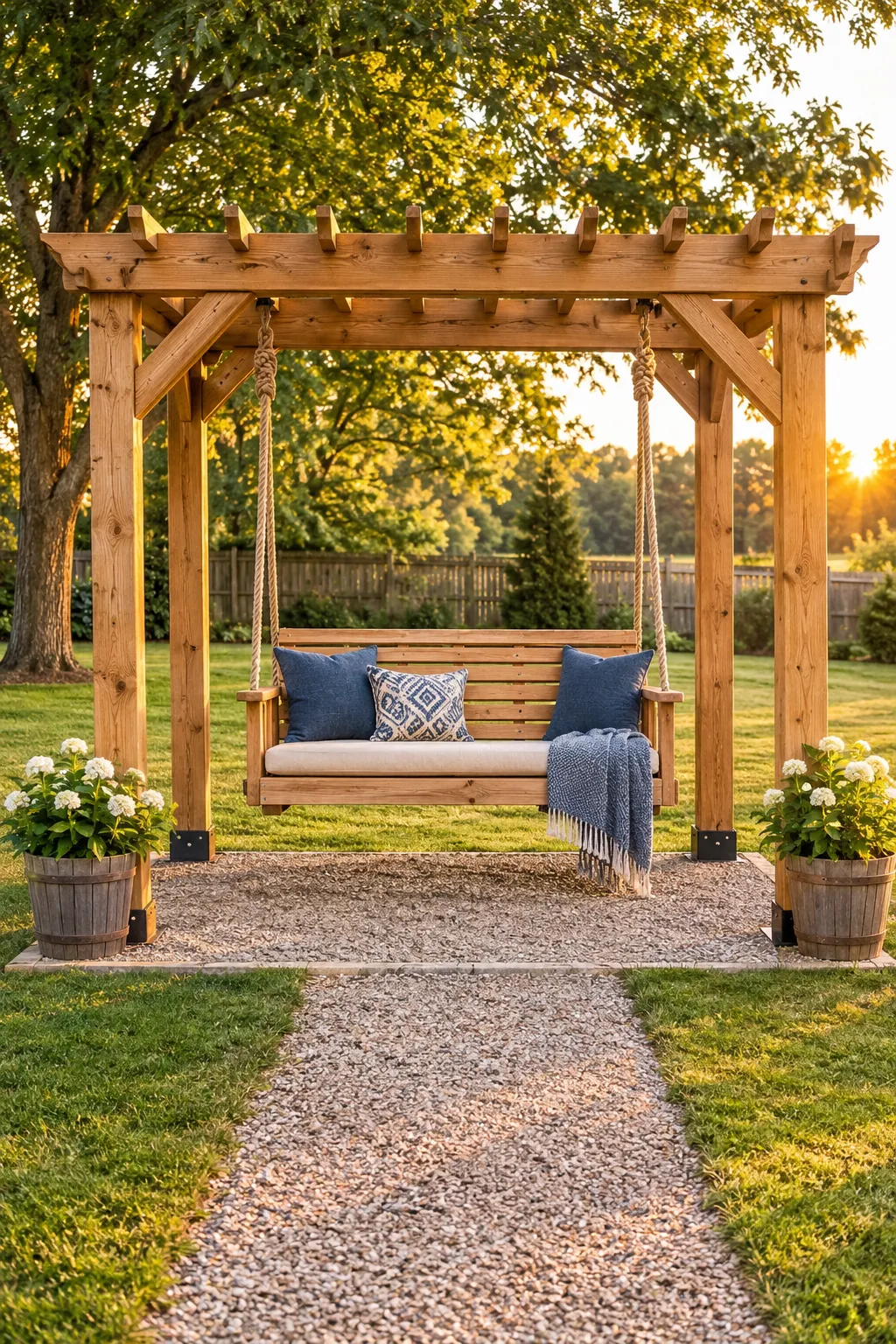
No good tree and no sturdy porch roof leaves a lot of yards stuck. A pergola frame fixes both problems and lets you put the swing wherever the yard looks best.
Decide three things before you cut:
- Footprint: leave room for the swing to travel forward and back, plus space for your feet.
- Posts: set them in concrete or on anchored post bases, depending on your ground.
- Crossbeam: choose a straight, solid beam and bolt it to the posts instead of just screwing it on.
Check your local building rules before you dig, and give the concrete time to cure before anyone sits down.
| Pergola frame | Existing porch beam |
|---|---|
| Goes anywhere in the yard | Stays where the porch already is |
| Bigger weekend project with digging | Mostly hardware, once the beam is checked |
| Slats can go overhead later for shade | Roof shade is already there |
| Best for open yards with no tree | Best for well built, covered porches |
Hang a Tree Swing the Safe Way With Through-Bolts

The most common tree swing mistake is the one that looks tidy: rope wrapped tight around the branch. As the branch grows, the rope cuts into the bark.
Here’s a safer way to hang it:
- Pick a living, thick, mostly horizontal branch with no cracks.
- Use hardware made for swings, with a locking nut and washers, and check its rating.
- Leave the hanging point loose enough to adjust as the branch grows.
Unsure about your tree? An arborist can tell you in one visit.
Choose a healthy branch with full leaves in season.
Check the hardware before every season.
Clear the ground underneath of rocks and roots.
Dead, cracked, or hollow branches.
Rope pulled tight around bare bark.
Hanging it over a hard patio or fence.
Add Drink Ledges to the Armrests of a Bench Swing
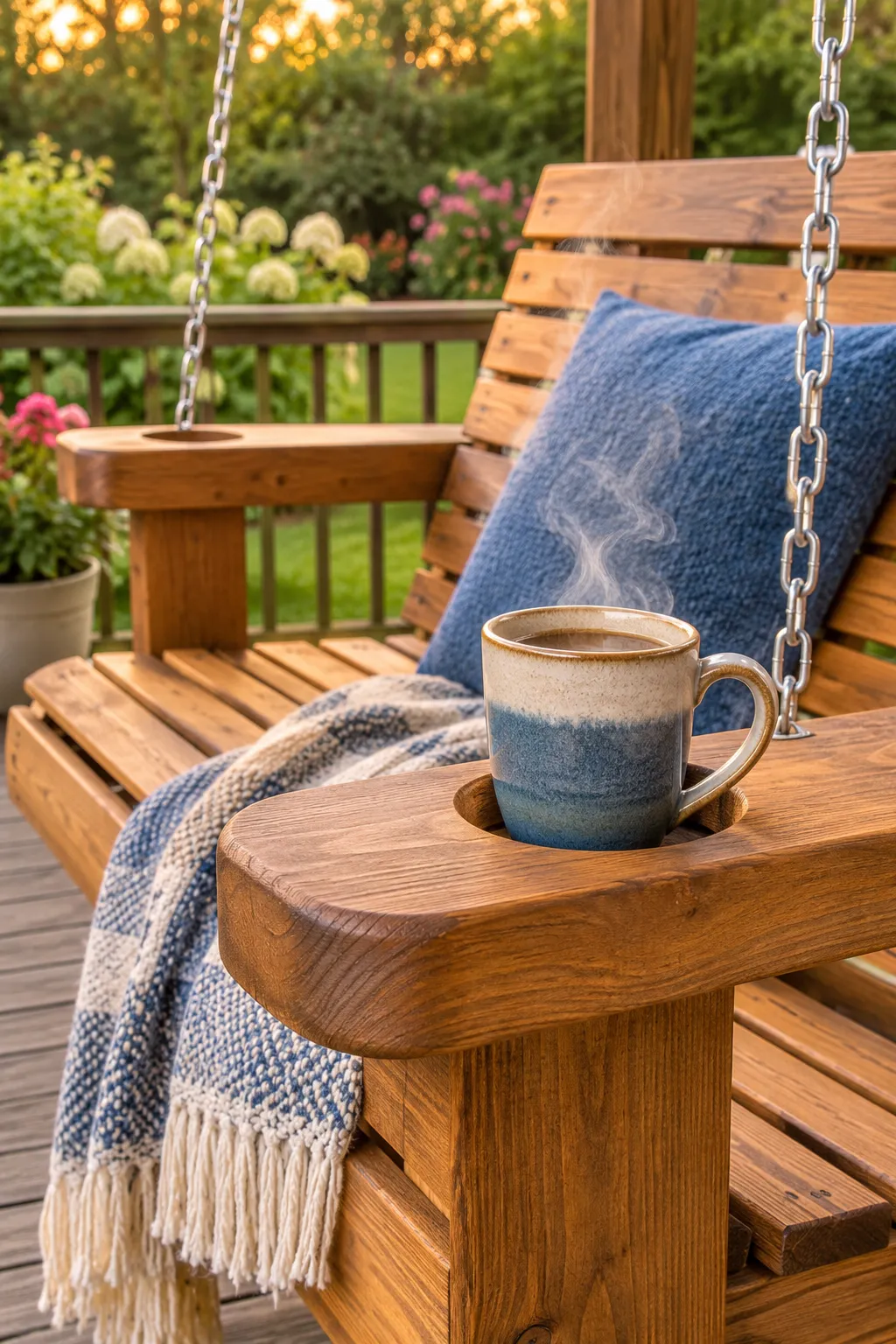
Somebody always sets a mug on the armrest, and somebody always bumps it.
A wider armrest fixes that. Screw a flat board on top of each arm so it sticks out a little past the frame. Then use a hole saw to cut a shallow recess sized to your favorite mug. A mug that sits down in the wood stays put even when the swing sways.
Round every edge with sandpaper, since you’ll rest your arm there all summer.
What to grab first
Build an Adirondack-Style Swing Chair With Angled Slats

The tilt is what makes an Adirondack chair feel so relaxed, and it works on a swing too.
Three moves get you there:
- Make the seat frame with the front slightly higher than the back.
- Cut one back slat to shape, then trace it onto the rest so they all match.
- Hang it from two ropes or chains and test the lean before you add arms.
Keep the arms wide and flat, and sand them well. They’re the first thing your hands find when you sit down.
Make an A-Frame Swing Set From 4×4 Lumber for Kids
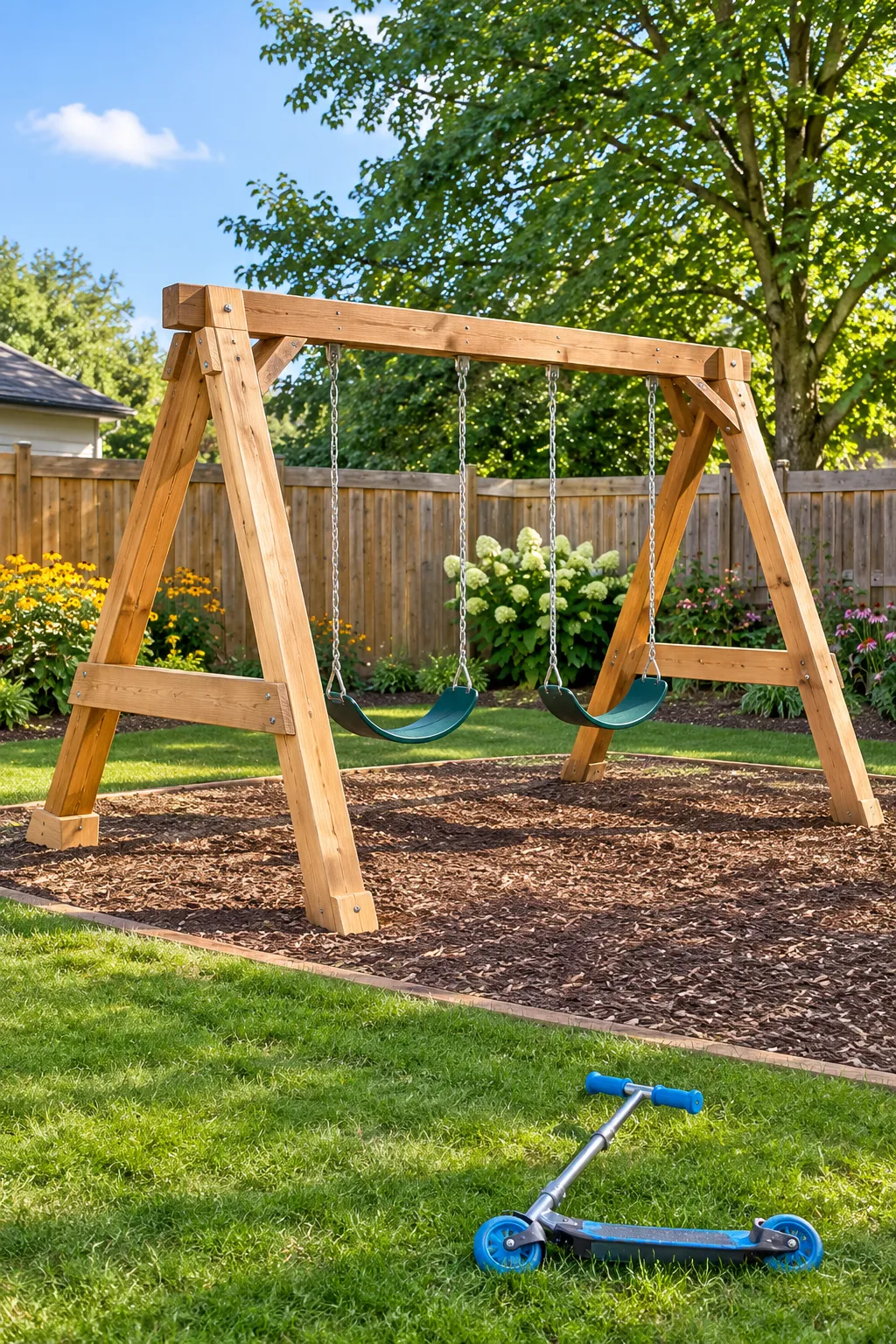
One rule runs this whole build: the frame has to stand solid before any swing goes on it.
An A-frame set uses two pairs of 4×4 legs that lean toward each other and meet at a top beam. Spread the legs wide at the base so the frame doesn’t wobble when the swings get going. Add diagonal braces, then fasten everything with exterior-rated bolts instead of nails. Hang each swing from hardware made for swings, and read the rating on the package.
Check every bolt at the start of each season.
⚠️ Watch Out
Check the ground and the space around the frame. Put mulch or a rubber surface under the swings, not bare dirt or concrete, and keep fences, walls, and trees well outside the swing path. Little kids should always have an adult close by.
Shape a Curved Back for a Plank Bench Swing Using a Simple Jig
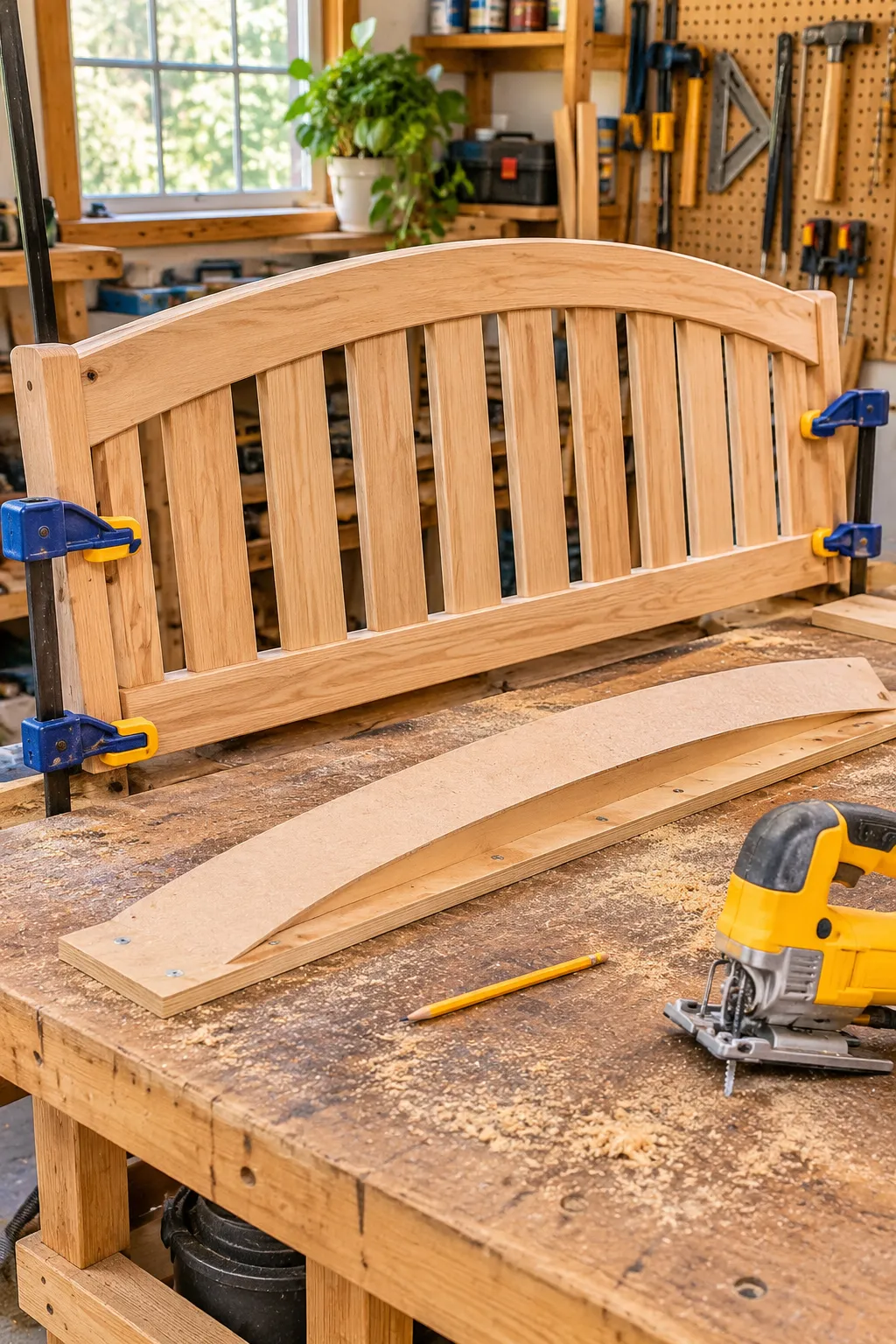
A curved back turns a stiff bench into one you can lean on for an hour.
The trick is a jig, which is just a template you make once and reuse. Bend a thin strip of scrap wood between two points on a board, trace along it, and cut that curve with a jigsaw. Sand the edge smooth. Then use that first piece to trace the second rail, so both sides match exactly.
Screw vertical slats across the two curved rails and the back is done.
Best for anyone who has already built a flat bench and wants the next step up.
Cut one curved rail, then trace it onto the second so both sides match.
Hang a Mini Shelf Swing for Your Potted Plants
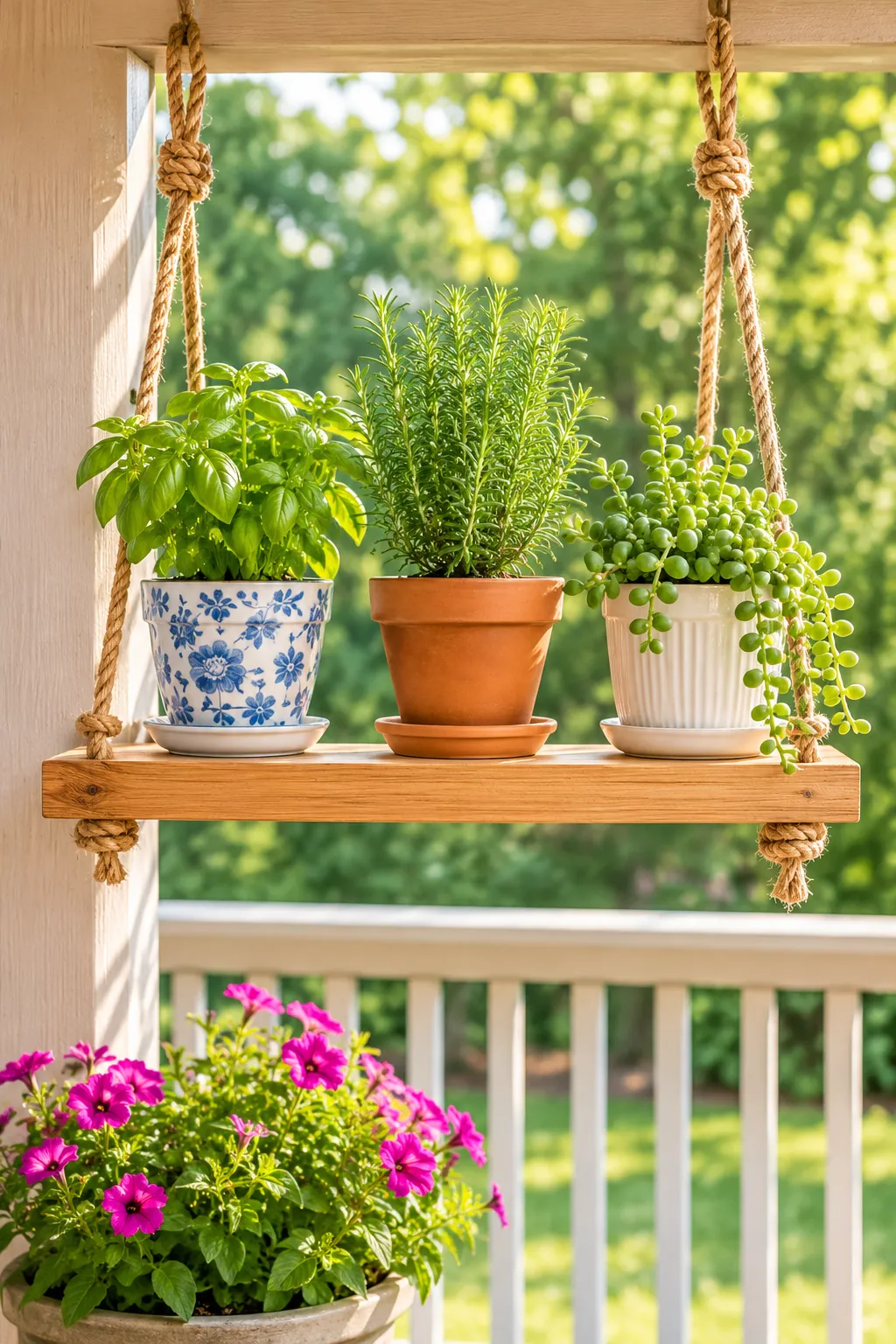
A narrow board, two short ropes, and a row of small pots. That’s the whole build.
Cut a board a little longer than your row of pots, sand it, and drill a hole at each end for the rope. Screw a thin strip along the front edge so pots can’t slide off when the shelf sways. Hang it from a hook on a porch beam, close to a post so it stays calm in the wind.
Pick lightweight pots, and set a saucer under each one so water doesn’t sit on the wood.
Keep it to small plants. This is a shelf, not a seat.
| Shady spot | Sunny spot |
|---|---|
| Ferns and small hostas | Succulents and herbs like thyme |
| Keep the soil lightly moist | Let the soil dry out between drinks |
| Plastic pots hold moisture and weigh less | Terracotta breathes and dries fast |
Craft a Bucket-Style Toddler Swing Seat From Scrap Wood
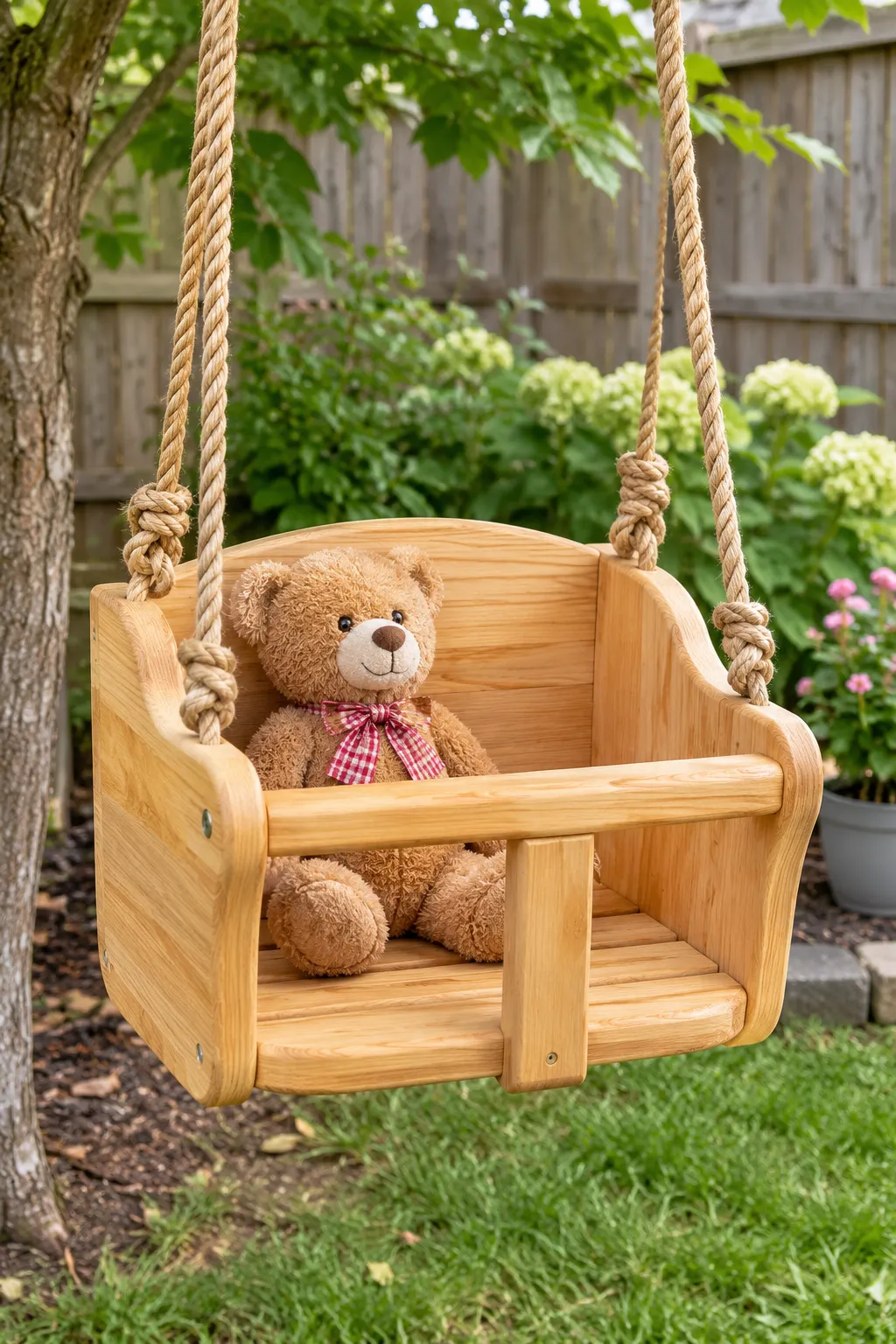
Toddlers slide out of flat seats in seconds. A bucket seat holds them in.
Build it from sturdy scrap boards with these parts:
- a flat base
- two high sides
- a back that rises above the sides
- a front bar or strap
Round every edge and sand until there are no splinters. Leave no gap where small fingers could get caught. Hang it from hardware made for swings, then test it with a weighted bag before your child sits in. An adult should be right there every time it’s used.
Set Up a Freestanding Lean-To Swing Frame for a Patio With No Tree

If you can’t dig, build a frame that stands on its own base.
Think of each side as a lean-to: an upright post, an angled brace behind it, and a base rail along the ground that ties them together. A beam across the tops carries the swing.
Plan for these:
- a flat, level spot like pavers, concrete, or packed gravel
- base rails longer than the swing’s travel
- a beam bolted to the posts, not just screwed
Check local rules, and add anchors if your yard gets strong wind.
💡 Quick Tip
Before you hang the seat, push the bare frame hard from the front, the back, and each side. If it rocks, lengthen the base rails. A wider base solves most wobble.
Add a Slatted Canopy Frame Over Your Porch Swing

Afternoon sun on the back of your neck ends a swing session fast.
A slatted canopy gives you shade without closing off the sky. Build a simple rectangle frame that sits above the swing, then screw thin 1×2 slats across the top with gaps between them. Light still gets through in stripes, but the glare drops.
Keep the canopy separate from the swing’s hanging beam, so the swing’s weight never pulls on the shade.
Leave a little extra room above the seat so the canopy doesn’t crowd your head when the swing moves.
Bright glare on the seat, a hot cushion, and nobody wants to sit there after lunch.
Striped, softer light, a cooler seat, and a swing that works from morning to late afternoon.
Build a Rope-and-Dowel Trapeze Swing for a Sturdy Beam

This is the simplest swing on the list, and it has the fewest parts.
A trapeze swing is one solid bar with a rope at each end. Kids like to hang and swing on it, and some adults like to sit on it. Because there’s no seat or back, the bar does all the work, so choose it carefully.
Hang it only from a beam or frame built to carry swinging weight, never a fence or a thin rail.
Test it with your own weight in small steps before anyone else tries it.
Check these before you hang it
Fit a Compact Corner Swing Into a Small Yard
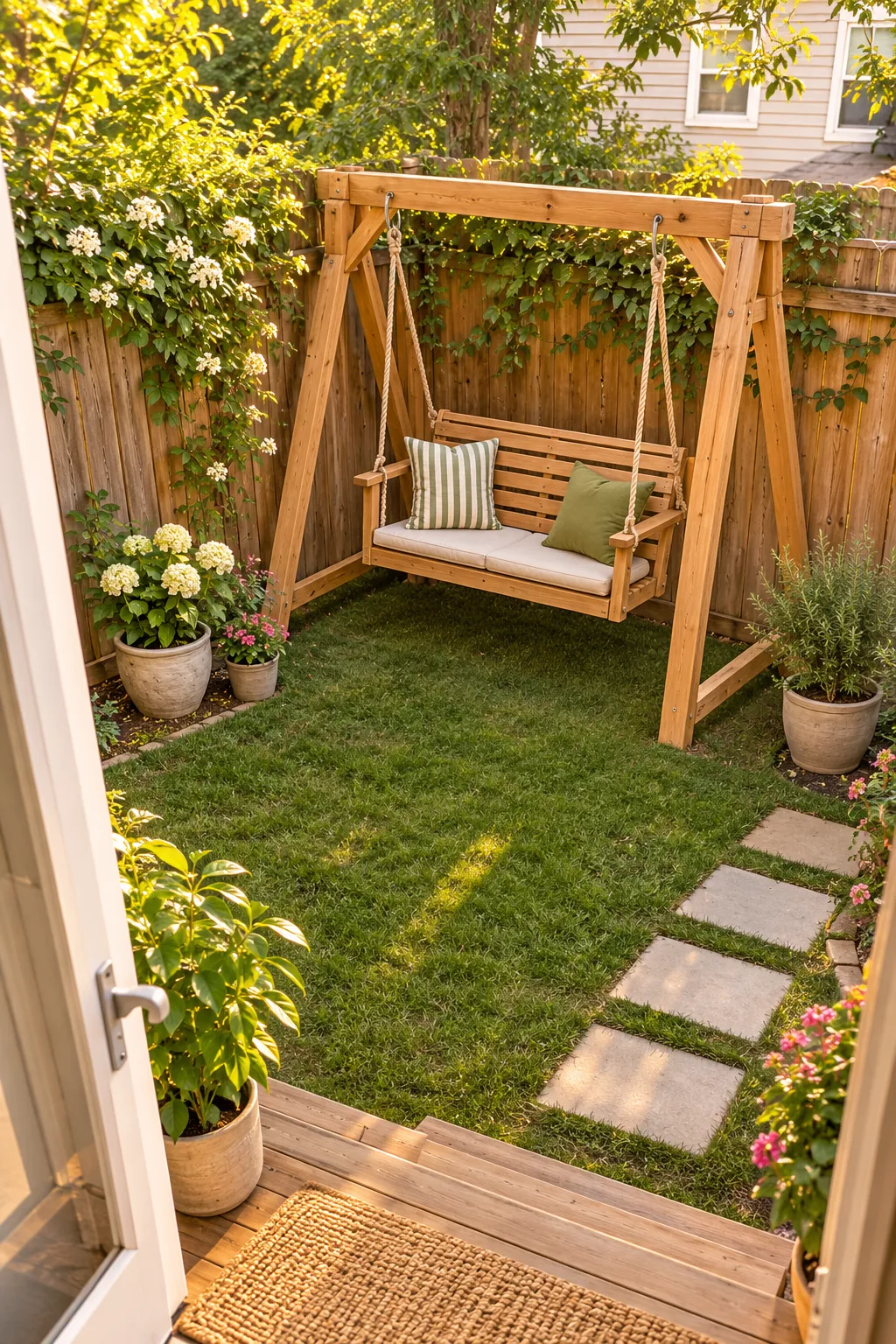
Small yards don’t have to go without. They just need a smaller swing.
Go with a narrow seat, for one person or two close friends. Tuck it into the corner where the fence meets the house, but build its own frame so it never hangs from the fence. Shorter ropes mean less swing, which is fine in a tight space.
Stand in the spot and walk through the swing’s path with your arms out before you buy any lumber. If you bump into something, move the plan.
Seal and Cushion Any Wooden Swing So It Lasts Through the Seasons

Raw wood and rain don’t get along.
An outdoor sealer is what keeps your swing from graying, splitting, and turning rough by next summer. Seal every surface, including the cut ends and the insides of the rope holes, because water sneaks in wherever the wood was cut.
The cushion is the comfy half. Look for outdoor fabric over foam that drains, and carry it inside when rain is on the way.
Each spring, tighten the screws, check the rope and hardware, and re-seal any patches that look dull or dry.
Sand every surface smooth, then wipe off the dust with a dry cloth.
Seal the cut ends and rope holes first, then the rest of the swing.
Let it dry the full time on the label. Add a second coat if the label calls for one.
Add the cushion, hang the swing, and store the cushion indoors in wet weather.
A backyard feels different once there’s a place to sit and sway. You don’t need a big budget or a full workshop. A single plank and some rope can get you started, and a frame or a porch swing can come later, when you’re ready.
Conclusion
Pick the one that fits your yard, build it in small steps, and check the hardware before anyone sits down. A diy wooden swing gets better every season, because you know exactly how it was made and how to fix it.
Before you hang any swing